Tuesday, November 4, 2008

Saturday, October 4, 2008
Protein Provides Satiety Through PYY
In our strange world, we have researchers now promoting the idea that a pharmaceutical version of the gut hormone PYY may offer a solution to help individuals lose weight.
In the MSN article, Natural Gut Hormones May Provide a Treatment for Obesity, we learn that researchers are seeking to develop a pill to provide the satiety hormone PYY.
"The advantage of developing weight loss medications based on gut-derived satiety hormones is that they enhance a process that occurs naturally. It is expected, therefore, that side effects will be minimal," says Dr Sainsbury-Salis.
Folks, we're not PYY deficient; in fact, I'd argue we're not eating the foods that stimulate PYY to effectively sate appetite naturally.
As I noted in a previous blog post about research investigating PYY, "A high protein diet led to spontaneous calorie reduction as PYY increased. The phenomenon was consistent with both the animal model using mice and in human studies used to validate the mice model. Over a longer term, the higher protein diet stimulated weight loss and enhanced PYY synthesis and secretion in mice."
As I noted in that post, the study I wrote about included quite specific detail about how diet influences the release of PYY in humans - "The ready availability of carbohydrate-rich grains and cereals has been a recent development in human nutrition with the onset of organized agriculture. Many of the physiological systems that regulate food intake were probably established and may function better under lower-carbohydrate and higher-protein dietary conditions."
Those were not my words, but the words of the researchers!
And now we have researchers looking to design a pill to provide what we already have naturally - if we eat adequate protein and fat. But, let's not go there and discuss diet, let's just pop a pill and continue along with the supposed "healthy diet" that obviously is not sating out appetite!
In the MSN article, Natural Gut Hormones May Provide a Treatment for Obesity, we learn that researchers are seeking to develop a pill to provide the satiety hormone PYY.
"The advantage of developing weight loss medications based on gut-derived satiety hormones is that they enhance a process that occurs naturally. It is expected, therefore, that side effects will be minimal," says Dr Sainsbury-Salis.
Folks, we're not PYY deficient; in fact, I'd argue we're not eating the foods that stimulate PYY to effectively sate appetite naturally.
As I noted in a previous blog post about research investigating PYY, "A high protein diet led to spontaneous calorie reduction as PYY increased. The phenomenon was consistent with both the animal model using mice and in human studies used to validate the mice model. Over a longer term, the higher protein diet stimulated weight loss and enhanced PYY synthesis and secretion in mice."
As I noted in that post, the study I wrote about included quite specific detail about how diet influences the release of PYY in humans - "The ready availability of carbohydrate-rich grains and cereals has been a recent development in human nutrition with the onset of organized agriculture. Many of the physiological systems that regulate food intake were probably established and may function better under lower-carbohydrate and higher-protein dietary conditions."
Those were not my words, but the words of the researchers!
And now we have researchers looking to design a pill to provide what we already have naturally - if we eat adequate protein and fat. But, let's not go there and discuss diet, let's just pop a pill and continue along with the supposed "healthy diet" that obviously is not sating out appetite!
Protein Provides Satiety Through PYY
The results of a survey conducted by the International Food Information Council were presented at the American Farm Bureau Federation's annual conference. The highlights and findings were discussed in an article in the Voice of Agriculture, in which we learn "42 percent of survey respondents feel that the food and health information they receive from various sources is contradictory. Slightly more than 30 percent said it was inconsistent."
Rachel Cheatham, Director of Science and Health Communications for the IFIC says "This really is the issue, [t]here is an overload of information. How do we package this information so that people understand it and know what to do with it?”
The survey results found that "very few people understand or apply the concept of energy balance, in which calories consumed and calories used are treated as an equation that results in weight maintenance, or depending on the individual’s goals, weight loss or gain. Almost half of the survey respondents said they don’t balance the calories they take in with the calories they use, while 16 percent said they do increase their exercise to compensate for eating more than usual."
I have to say I'm not surprised - it's simply not natural for us to be so calorie obessed, to the point where we are ever aware of the calories were eating each day - so it's no wonder that most people don't make it a point to "balance" calories in and calories out each day!
The article however makes this an issue of selling the concept to consumers rather than questioning its validity; "calorie counting is a hard sell."
For some reason we are stuck in this thinking that the problem isn't the concept, but the execution. If it were only that easy. If it were only a matter that people don't get it and more education would lead to better compliance. If it were only a matter of calories in and calories out, and just following a recipe to eat x-servings of this and y-servings of that each day to remain within prescribed calorie intake.
I've said it many times before - the flaw is in the recommendations, not in those trying to follow them! It's more than just calories, and rather than try to sell consumers on an unnatural way of eating each day, perhaps time is better spent understanding how modification of the macronutrients (carbohydrate, protein and fat) can lead to spontaneous reduction of calorie intake without counting calories.
Until the powers that be begin to address the role of nutrients and micronutrients on hunger and satiety, on nutritional status, and on health and well-being, little is going to change.
Afterall, the thinking goes that it remains the fault of the individual to not follow the recommendations rather than the recommendations failing to live up to expectations and provide the necessary nutrients and satiety to be followed long-term successfully.
I've said before, "The failure of the dietary recommendations are no small matter, various agencies go to great pains to explain away the long-term failure and wind up making the issue one of personal failure rather than admit the flaw is in the recommendations."
If you'd like to read more on the issue of our flawed recommendations, two previous articles provide greater depth on the subject:
Rachel Cheatham, Director of Science and Health Communications for the IFIC says "This really is the issue, [t]here is an overload of information. How do we package this information so that people understand it and know what to do with it?”
The survey results found that "very few people understand or apply the concept of energy balance, in which calories consumed and calories used are treated as an equation that results in weight maintenance, or depending on the individual’s goals, weight loss or gain. Almost half of the survey respondents said they don’t balance the calories they take in with the calories they use, while 16 percent said they do increase their exercise to compensate for eating more than usual."
I have to say I'm not surprised - it's simply not natural for us to be so calorie obessed, to the point where we are ever aware of the calories were eating each day - so it's no wonder that most people don't make it a point to "balance" calories in and calories out each day!
The article however makes this an issue of selling the concept to consumers rather than questioning its validity; "calorie counting is a hard sell."
For some reason we are stuck in this thinking that the problem isn't the concept, but the execution. If it were only that easy. If it were only a matter that people don't get it and more education would lead to better compliance. If it were only a matter of calories in and calories out, and just following a recipe to eat x-servings of this and y-servings of that each day to remain within prescribed calorie intake.
I've said it many times before - the flaw is in the recommendations, not in those trying to follow them! It's more than just calories, and rather than try to sell consumers on an unnatural way of eating each day, perhaps time is better spent understanding how modification of the macronutrients (carbohydrate, protein and fat) can lead to spontaneous reduction of calorie intake without counting calories.
Until the powers that be begin to address the role of nutrients and micronutrients on hunger and satiety, on nutritional status, and on health and well-being, little is going to change.
Afterall, the thinking goes that it remains the fault of the individual to not follow the recommendations rather than the recommendations failing to live up to expectations and provide the necessary nutrients and satiety to be followed long-term successfully.
I've said before, "The failure of the dietary recommendations are no small matter, various agencies go to great pains to explain away the long-term failure and wind up making the issue one of personal failure rather than admit the flaw is in the recommendations."
If you'd like to read more on the issue of our flawed recommendations, two previous articles provide greater depth on the subject:
- Fatally Flawed Health & Risk Paradigms
- Fatally Flawed Health & Risk Paradigms 2
Calorie Counting: A Hard Sell
The results of a survey conducted by the International Food Information Council were presented at the American Farm Bureau Federation's annual conference. The highlights and findings were discussed in an article in the Voice of Agriculture, in which we learn "42 percent of survey respondents feel that the food and health information they receive from various sources is contradictory. Slightly more than 30 percent said it was inconsistent."
Rachel Cheatham, Director of Science and Health Communications for the IFIC says "This really is the issue, [t]here is an overload of information. How do we package this information so that people understand it and know what to do with it?”
The survey results found that "very few people understand or apply the concept of energy balance, in which calories consumed and calories used are treated as an equation that results in weight maintenance, or depending on the individual’s goals, weight loss or gain. Almost half of the survey respondents said they don’t balance the calories they take in with the calories they use, while 16 percent said they do increase their exercise to compensate for eating more than usual."
I have to say I'm not surprised - it's simply not natural for us to be so calorie obessed, to the point where we are ever aware of the calories were eating each day - so it's no wonder that most people don't make it a point to "balance" calories in and calories out each day!
The article however makes this an issue of selling the concept to consumers rather than questioning its validity; "calorie counting is a hard sell."
For some reason we are stuck in this thinking that the problem isn't the concept, but the execution. If it were only that easy. If it were only a matter that people don't get it and more education would lead to better compliance. If it were only a matter of calories in and calories out, and just following a recipe to eat x-servings of this and y-servings of that each day to remain within prescribed calorie intake.
I've said it many times before - the flaw is in the recommendations, not in those trying to follow them! It's more than just calories, and rather than try to sell consumers on an unnatural way of eating each day, perhaps time is better spent understanding how modification of the macronutrients (carbohydrate, protein and fat) can lead to spontaneous reduction of calorie intake without counting calories.
Until the powers that be begin to address the role of nutrients and micronutrients on hunger and satiety, on nutritional status, and on health and well-being, little is going to change.
Afterall, the thinking goes that it remains the fault of the individual to not follow the recommendations rather than the recommendations failing to live up to expectations and provide the necessary nutrients and satiety to be followed long-term successfully.
I've said before, "The failure of the dietary recommendations are no small matter, various agencies go to great pains to explain away the long-term failure and wind up making the issue one of personal failure rather than admit the flaw is in the recommendations."
If you'd like to read more on the issue of our flawed recommendations, two previous articles provide greater depth on the subject:
Rachel Cheatham, Director of Science and Health Communications for the IFIC says "This really is the issue, [t]here is an overload of information. How do we package this information so that people understand it and know what to do with it?”
The survey results found that "very few people understand or apply the concept of energy balance, in which calories consumed and calories used are treated as an equation that results in weight maintenance, or depending on the individual’s goals, weight loss or gain. Almost half of the survey respondents said they don’t balance the calories they take in with the calories they use, while 16 percent said they do increase their exercise to compensate for eating more than usual."
I have to say I'm not surprised - it's simply not natural for us to be so calorie obessed, to the point where we are ever aware of the calories were eating each day - so it's no wonder that most people don't make it a point to "balance" calories in and calories out each day!
The article however makes this an issue of selling the concept to consumers rather than questioning its validity; "calorie counting is a hard sell."
For some reason we are stuck in this thinking that the problem isn't the concept, but the execution. If it were only that easy. If it were only a matter that people don't get it and more education would lead to better compliance. If it were only a matter of calories in and calories out, and just following a recipe to eat x-servings of this and y-servings of that each day to remain within prescribed calorie intake.
I've said it many times before - the flaw is in the recommendations, not in those trying to follow them! It's more than just calories, and rather than try to sell consumers on an unnatural way of eating each day, perhaps time is better spent understanding how modification of the macronutrients (carbohydrate, protein and fat) can lead to spontaneous reduction of calorie intake without counting calories.
Until the powers that be begin to address the role of nutrients and micronutrients on hunger and satiety, on nutritional status, and on health and well-being, little is going to change.
Afterall, the thinking goes that it remains the fault of the individual to not follow the recommendations rather than the recommendations failing to live up to expectations and provide the necessary nutrients and satiety to be followed long-term successfully.
I've said before, "The failure of the dietary recommendations are no small matter, various agencies go to great pains to explain away the long-term failure and wind up making the issue one of personal failure rather than admit the flaw is in the recommendations."
If you'd like to read more on the issue of our flawed recommendations, two previous articles provide greater depth on the subject:
- Fatally Flawed Health & Risk Paradigms
- Fatally Flawed Health & Risk Paradigms 2
Protein Provides Satiety Through PYY
In our strange world, we have researchers now promoting the idea that a pharmaceutical version of the gut hormone PYY may offer a solution to help individuals lose weight.
In the MSN article, Natural Gut Hormones May Provide a Treatment for Obesity, we learn that researchers are seeking to develop a pill to provide the satiety hormone PYY.
"The advantage of developing weight loss medications based on gut-derived satiety hormones is that they enhance a process that occurs naturally. It is expected, therefore, that side effects will be minimal," says Dr Sainsbury-Salis.
Folks, we're not PYY deficient; in fact, I'd argue we're not eating the foods that stimulate PYY to effectively sate appetite naturally.
As I noted in a previous blog post about research investigating PYY, "A high protein diet led to spontaneous calorie reduction as PYY increased. The phenomenon was consistent with both the animal model using mice and in human studies used to validate the mice model. Over a longer term, the higher protein diet stimulated weight loss and enhanced PYY synthesis and secretion in mice."
As I noted in that post, the study I wrote about included quite specific detail about how diet influences the release of PYY in humans - "The ready availability of carbohydrate-rich grains and cereals has been a recent development in human nutrition with the onset of organized agriculture. Many of the physiological systems that regulate food intake were probably established and may function better under lower-carbohydrate and higher-protein dietary conditions."
Those were not my words, but the words of the researchers!
And now we have researchers looking to design a pill to provide what we already have naturally - if we eat adequate protein and fat. But, let's not go there and discuss diet, let's just pop a pill and continue along with the supposed "healthy diet" that obviously is not sating out appetite!
In the MSN article, Natural Gut Hormones May Provide a Treatment for Obesity, we learn that researchers are seeking to develop a pill to provide the satiety hormone PYY.
"The advantage of developing weight loss medications based on gut-derived satiety hormones is that they enhance a process that occurs naturally. It is expected, therefore, that side effects will be minimal," says Dr Sainsbury-Salis.
Folks, we're not PYY deficient; in fact, I'd argue we're not eating the foods that stimulate PYY to effectively sate appetite naturally.
As I noted in a previous blog post about research investigating PYY, "A high protein diet led to spontaneous calorie reduction as PYY increased. The phenomenon was consistent with both the animal model using mice and in human studies used to validate the mice model. Over a longer term, the higher protein diet stimulated weight loss and enhanced PYY synthesis and secretion in mice."
As I noted in that post, the study I wrote about included quite specific detail about how diet influences the release of PYY in humans - "The ready availability of carbohydrate-rich grains and cereals has been a recent development in human nutrition with the onset of organized agriculture. Many of the physiological systems that regulate food intake were probably established and may function better under lower-carbohydrate and higher-protein dietary conditions."
Those were not my words, but the words of the researchers!
And now we have researchers looking to design a pill to provide what we already have naturally - if we eat adequate protein and fat. But, let's not go there and discuss diet, let's just pop a pill and continue along with the supposed "healthy diet" that obviously is not sating out appetite!
Calorie Counting: A Hard Sell
The results of a survey conducted by the International Food Information Council were presented at the American Farm Bureau Federation's annual conference. The highlights and findings were discussed in an article in the Voice of Agriculture, in which we learn "42 percent of survey respondents feel that the food and health information they receive from various sources is contradictory. Slightly more than 30 percent said it was inconsistent."
Rachel Cheatham, Director of Science and Health Communications for the IFIC says "This really is the issue, [t]here is an overload of information. How do we package this information so that people understand it and know what to do with it?”
The survey results found that "very few people understand or apply the concept of energy balance, in which calories consumed and calories used are treated as an equation that results in weight maintenance, or depending on the individual’s goals, weight loss or gain. Almost half of the survey respondents said they don’t balance the calories they take in with the calories they use, while 16 percent said they do increase their exercise to compensate for eating more than usual."
I have to say I'm not surprised - it's simply not natural for us to be so calorie obessed, to the point where we are ever aware of the calories were eating each day - so it's no wonder that most people don't make it a point to "balance" calories in and calories out each day!
The article however makes this an issue of selling the concept to consumers rather than questioning its validity; "calorie counting is a hard sell."
For some reason we are stuck in this thinking that the problem isn't the concept, but the execution. If it were only that easy. If it were only a matter that people don't get it and more education would lead to better compliance. If it were only a matter of calories in and calories out, and just following a recipe to eat x-servings of this and y-servings of that each day to remain within prescribed calorie intake.
I've said it many times before - the flaw is in the recommendations, not in those trying to follow them! It's more than just calories, and rather than try to sell consumers on an unnatural way of eating each day, perhaps time is better spent understanding how modification of the macronutrients (carbohydrate, protein and fat) can lead to spontaneous reduction of calorie intake without counting calories.
Until the powers that be begin to address the role of nutrients and micronutrients on hunger and satiety, on nutritional status, and on health and well-being, little is going to change.
Afterall, the thinking goes that it remains the fault of the individual to not follow the recommendations rather than the recommendations failing to live up to expectations and provide the necessary nutrients and satiety to be followed long-term successfully.
I've said before, "The failure of the dietary recommendations are no small matter, various agencies go to great pains to explain away the long-term failure and wind up making the issue one of personal failure rather than admit the flaw is in the recommendations."
If you'd like to read more on the issue of our flawed recommendations, two previous articles provide greater depth on the subject:
Rachel Cheatham, Director of Science and Health Communications for the IFIC says "This really is the issue, [t]here is an overload of information. How do we package this information so that people understand it and know what to do with it?”
The survey results found that "very few people understand or apply the concept of energy balance, in which calories consumed and calories used are treated as an equation that results in weight maintenance, or depending on the individual’s goals, weight loss or gain. Almost half of the survey respondents said they don’t balance the calories they take in with the calories they use, while 16 percent said they do increase their exercise to compensate for eating more than usual."
I have to say I'm not surprised - it's simply not natural for us to be so calorie obessed, to the point where we are ever aware of the calories were eating each day - so it's no wonder that most people don't make it a point to "balance" calories in and calories out each day!
The article however makes this an issue of selling the concept to consumers rather than questioning its validity; "calorie counting is a hard sell."
For some reason we are stuck in this thinking that the problem isn't the concept, but the execution. If it were only that easy. If it were only a matter that people don't get it and more education would lead to better compliance. If it were only a matter of calories in and calories out, and just following a recipe to eat x-servings of this and y-servings of that each day to remain within prescribed calorie intake.
I've said it many times before - the flaw is in the recommendations, not in those trying to follow them! It's more than just calories, and rather than try to sell consumers on an unnatural way of eating each day, perhaps time is better spent understanding how modification of the macronutrients (carbohydrate, protein and fat) can lead to spontaneous reduction of calorie intake without counting calories.
Until the powers that be begin to address the role of nutrients and micronutrients on hunger and satiety, on nutritional status, and on health and well-being, little is going to change.
Afterall, the thinking goes that it remains the fault of the individual to not follow the recommendations rather than the recommendations failing to live up to expectations and provide the necessary nutrients and satiety to be followed long-term successfully.
I've said before, "The failure of the dietary recommendations are no small matter, various agencies go to great pains to explain away the long-term failure and wind up making the issue one of personal failure rather than admit the flaw is in the recommendations."
If you'd like to read more on the issue of our flawed recommendations, two previous articles provide greater depth on the subject:
- Fatally Flawed Health & Risk Paradigms
- Fatally Flawed Health & Risk Paradigms 2
What if Willpower Matters Little in the Long-Term for Weight?
In my last post I noted that the idea of counting calories to maintain a balance between calories in and calories out is an unnatural state of being. Yet is it exactly what is promoted, has been promoted for decades, and increasingly is being promoted in what could be considered a 'cradle to grave' approach, where even children are being subjected to messages designed to make them ever aware of calories in, calories out - if they gain weight, it's obviously their fault that they didn't get it right.
As I said in my previous post, "For some reason we are stuck in this thinking that the problem isn't the concept, but the execution."
Some lively discussion in the comments followed, as well as a good number of emails - with most boiling down to four main themes - any type of restriction is difficult, counting carbohydrates is as unnatural as counting calories, most people won't eat just whole, natural foods and most people won't do what it takes anyway.
How depressing!
But I definitely understand the points made, and think at least opening a discussion on the issue has value for the future.
Afterall, we can safely say, based on the evidence available, almost every weight loss diet dreamed up in the last century works - data clearly shows that calorie restriction, dietary fat reduction, carbohydrate restriction, increasing protein, manipulating glycemic index or glycemic load, using shakes and meal replacements, fasting approaches, and even weight loss surgery all enable an individual to lose weight.
The diet or medical intervention one utilizes does not matter all that much - they all work for weight loss - so to say one approach is better than the other for weight loss truly has little value for long-term success to maintain weight loss.
Weight loss isn't the problem - keeping the weight off afterward is the really critical issue that we continue to fail to address in a meaningful way to actually see long-term results.
Oh, don't get me wrong, the diet industry, along with the medical and research communities talk a good story, point to data from those few who manage to maintain their weight loss in a national registry, and repeat again and again that failure comes down to lack of willpower in the individual. If only a person would continue, for the long-term, the dietary principles they utilized to lose the weight, they would not gain back the weight lost.
As Sandy Szwarc said in a Junkfood Science post early last year, "Only long-term results, after weights have stabilized, are relevant when evaluating any diet and, more importantly, any actual impact on health outcomes."
While I don't always agree with Sandy's take on things, or her conclusions, she is well known for taking an evidence-based approach in her writing and on this issue I agree 100% - not because everything she wrote in the above linked article was spot-on, but because she stated something so obviously ignored in the current urgency to do something about the "obesity epidemic" that seems to have no workable long-term solution.
The rising incidence of obesity in the United States is not new - for decades now we've watched as each year more and more of our population is classified as overweight or obese; and it does not appear to be reversing, despite the continuous messages to eat less and move more, be aware of calories in and calories out, just do it and stick to it.
Oddly it seems, the louder the messages get, the fatter the population grows.
Yet, while it's acknowledged that in the long-term dieting doesn't seem to result in long-term weight stabilization and maintenance, few are asking why.
Instead we're left with the idea that all these tens of millions of people who lose weight on a diet lack the willpower and resolve to maintain a healthy-balanced diet in the long-term.
It's the failure of the individual not the dietary principles they're told work - as I said before, the failure is not the concept, but the execution.
Every single year, tens of millions of people set out to lose weight and the vast majority do lose weight - they celebrate, buy new clothes, enjoy high self-esteem, are empowered by their success and feel great.....and then are just too damn weak, so they eat themselves back to where they started?
Is this not where the idea that it's a lack of willpower takes us?
If it's not willpower, then what does enable successful weight loss followed my maintenance and improved health outcomes in the long-term?
Before embarking on an exploration of this issue next week, I'd like to hear from readers about their experiences - success and failure - and what ultimately you've learned over the years? If you had to give advice on how to maintain weight loss for the long-term, what would you suggest based on your experiences?
As I said in my previous post, "For some reason we are stuck in this thinking that the problem isn't the concept, but the execution."
Some lively discussion in the comments followed, as well as a good number of emails - with most boiling down to four main themes - any type of restriction is difficult, counting carbohydrates is as unnatural as counting calories, most people won't eat just whole, natural foods and most people won't do what it takes anyway.
How depressing!
But I definitely understand the points made, and think at least opening a discussion on the issue has value for the future.
Afterall, we can safely say, based on the evidence available, almost every weight loss diet dreamed up in the last century works - data clearly shows that calorie restriction, dietary fat reduction, carbohydrate restriction, increasing protein, manipulating glycemic index or glycemic load, using shakes and meal replacements, fasting approaches, and even weight loss surgery all enable an individual to lose weight.
The diet or medical intervention one utilizes does not matter all that much - they all work for weight loss - so to say one approach is better than the other for weight loss truly has little value for long-term success to maintain weight loss.
Weight loss isn't the problem - keeping the weight off afterward is the really critical issue that we continue to fail to address in a meaningful way to actually see long-term results.
Oh, don't get me wrong, the diet industry, along with the medical and research communities talk a good story, point to data from those few who manage to maintain their weight loss in a national registry, and repeat again and again that failure comes down to lack of willpower in the individual. If only a person would continue, for the long-term, the dietary principles they utilized to lose the weight, they would not gain back the weight lost.
As Sandy Szwarc said in a Junkfood Science post early last year, "Only long-term results, after weights have stabilized, are relevant when evaluating any diet and, more importantly, any actual impact on health outcomes."
While I don't always agree with Sandy's take on things, or her conclusions, she is well known for taking an evidence-based approach in her writing and on this issue I agree 100% - not because everything she wrote in the above linked article was spot-on, but because she stated something so obviously ignored in the current urgency to do something about the "obesity epidemic" that seems to have no workable long-term solution.
The rising incidence of obesity in the United States is not new - for decades now we've watched as each year more and more of our population is classified as overweight or obese; and it does not appear to be reversing, despite the continuous messages to eat less and move more, be aware of calories in and calories out, just do it and stick to it.
Oddly it seems, the louder the messages get, the fatter the population grows.
Yet, while it's acknowledged that in the long-term dieting doesn't seem to result in long-term weight stabilization and maintenance, few are asking why.
Instead we're left with the idea that all these tens of millions of people who lose weight on a diet lack the willpower and resolve to maintain a healthy-balanced diet in the long-term.
It's the failure of the individual not the dietary principles they're told work - as I said before, the failure is not the concept, but the execution.
Every single year, tens of millions of people set out to lose weight and the vast majority do lose weight - they celebrate, buy new clothes, enjoy high self-esteem, are empowered by their success and feel great.....and then are just too damn weak, so they eat themselves back to where they started?
Is this not where the idea that it's a lack of willpower takes us?
If it's not willpower, then what does enable successful weight loss followed my maintenance and improved health outcomes in the long-term?
Before embarking on an exploration of this issue next week, I'd like to hear from readers about their experiences - success and failure - and what ultimately you've learned over the years? If you had to give advice on how to maintain weight loss for the long-term, what would you suggest based on your experiences?
What if Willpower Matters Little in the Long-Term for Weight?
In my last post I noted that the idea of counting calories to maintain a balance between calories in and calories out is an unnatural state of being. Yet is it exactly what is promoted, has been promoted for decades, and increasingly is being promoted in what could be considered a 'cradle to grave' approach, where even children are being subjected to messages designed to make them ever aware of calories in, calories out - if they gain weight, it's obviously their fault that they didn't get it right.
As I said in my previous post, "For some reason we are stuck in this thinking that the problem isn't the concept, but the execution."
Some lively discussion in the comments followed, as well as a good number of emails - with most boiling down to four main themes - any type of restriction is difficult, counting carbohydrates is as unnatural as counting calories, most people won't eat just whole, natural foods and most people won't do what it takes anyway.
How depressing!
But I definitely understand the points made, and think at least opening a discussion on the issue has value for the future.
Afterall, we can safely say, based on the evidence available, almost every weight loss diet dreamed up in the last century works - data clearly shows that calorie restriction, dietary fat reduction, carbohydrate restriction, increasing protein, manipulating glycemic index or glycemic load, using shakes and meal replacements, fasting approaches, and even weight loss surgery all enable an individual to lose weight.
The diet or medical intervention one utilizes does not matter all that much - they all work for weight loss - so to say one approach is better than the other for weight loss truly has little value for long-term success to maintain weight loss.
Weight loss isn't the problem - keeping the weight off afterward is the really critical issue that we continue to fail to address in a meaningful way to actually see long-term results.
Oh, don't get me wrong, the diet industry, along with the medical and research communities talk a good story, point to data from those few who manage to maintain their weight loss in a national registry, and repeat again and again that failure comes down to lack of willpower in the individual. If only a person would continue, for the long-term, the dietary principles they utilized to lose the weight, they would not gain back the weight lost.
As Sandy Szwarc said in a Junkfood Science post early last year, "Only long-term results, after weights have stabilized, are relevant when evaluating any diet and, more importantly, any actual impact on health outcomes."
While I don't always agree with Sandy's take on things, or her conclusions, she is well known for taking an evidence-based approach in her writing and on this issue I agree 100% - not because everything she wrote in the above linked article was spot-on, but because she stated something so obviously ignored in the current urgency to do something about the "obesity epidemic" that seems to have no workable long-term solution.
The rising incidence of obesity in the United States is not new - for decades now we've watched as each year more and more of our population is classified as overweight or obese; and it does not appear to be reversing, despite the continuous messages to eat less and move more, be aware of calories in and calories out, just do it and stick to it.
Oddly it seems, the louder the messages get, the fatter the population grows.
Yet, while it's acknowledged that in the long-term dieting doesn't seem to result in long-term weight stabilization and maintenance, few are asking why.
Instead we're left with the idea that all these tens of millions of people who lose weight on a diet lack the willpower and resolve to maintain a healthy-balanced diet in the long-term.
It's the failure of the individual not the dietary principles they're told work - as I said before, the failure is not the concept, but the execution.
Every single year, tens of millions of people set out to lose weight and the vast majority do lose weight - they celebrate, buy new clothes, enjoy high self-esteem, are empowered by their success and feel great.....and then are just too damn weak, so they eat themselves back to where they started?
Is this not where the idea that it's a lack of willpower takes us?
If it's not willpower, then what does enable successful weight loss followed my maintenance and improved health outcomes in the long-term?
Before embarking on an exploration of this issue next week, I'd like to hear from readers about their experiences - success and failure - and what ultimately you've learned over the years? If you had to give advice on how to maintain weight loss for the long-term, what would you suggest based on your experiences?
As I said in my previous post, "For some reason we are stuck in this thinking that the problem isn't the concept, but the execution."
Some lively discussion in the comments followed, as well as a good number of emails - with most boiling down to four main themes - any type of restriction is difficult, counting carbohydrates is as unnatural as counting calories, most people won't eat just whole, natural foods and most people won't do what it takes anyway.
How depressing!
But I definitely understand the points made, and think at least opening a discussion on the issue has value for the future.
Afterall, we can safely say, based on the evidence available, almost every weight loss diet dreamed up in the last century works - data clearly shows that calorie restriction, dietary fat reduction, carbohydrate restriction, increasing protein, manipulating glycemic index or glycemic load, using shakes and meal replacements, fasting approaches, and even weight loss surgery all enable an individual to lose weight.
The diet or medical intervention one utilizes does not matter all that much - they all work for weight loss - so to say one approach is better than the other for weight loss truly has little value for long-term success to maintain weight loss.
Weight loss isn't the problem - keeping the weight off afterward is the really critical issue that we continue to fail to address in a meaningful way to actually see long-term results.
Oh, don't get me wrong, the diet industry, along with the medical and research communities talk a good story, point to data from those few who manage to maintain their weight loss in a national registry, and repeat again and again that failure comes down to lack of willpower in the individual. If only a person would continue, for the long-term, the dietary principles they utilized to lose the weight, they would not gain back the weight lost.
As Sandy Szwarc said in a Junkfood Science post early last year, "Only long-term results, after weights have stabilized, are relevant when evaluating any diet and, more importantly, any actual impact on health outcomes."
While I don't always agree with Sandy's take on things, or her conclusions, she is well known for taking an evidence-based approach in her writing and on this issue I agree 100% - not because everything she wrote in the above linked article was spot-on, but because she stated something so obviously ignored in the current urgency to do something about the "obesity epidemic" that seems to have no workable long-term solution.
The rising incidence of obesity in the United States is not new - for decades now we've watched as each year more and more of our population is classified as overweight or obese; and it does not appear to be reversing, despite the continuous messages to eat less and move more, be aware of calories in and calories out, just do it and stick to it.
Oddly it seems, the louder the messages get, the fatter the population grows.
Yet, while it's acknowledged that in the long-term dieting doesn't seem to result in long-term weight stabilization and maintenance, few are asking why.
Instead we're left with the idea that all these tens of millions of people who lose weight on a diet lack the willpower and resolve to maintain a healthy-balanced diet in the long-term.
It's the failure of the individual not the dietary principles they're told work - as I said before, the failure is not the concept, but the execution.
Every single year, tens of millions of people set out to lose weight and the vast majority do lose weight - they celebrate, buy new clothes, enjoy high self-esteem, are empowered by their success and feel great.....and then are just too damn weak, so they eat themselves back to where they started?
Is this not where the idea that it's a lack of willpower takes us?
If it's not willpower, then what does enable successful weight loss followed my maintenance and improved health outcomes in the long-term?
Before embarking on an exploration of this issue next week, I'd like to hear from readers about their experiences - success and failure - and what ultimately you've learned over the years? If you had to give advice on how to maintain weight loss for the long-term, what would you suggest based on your experiences?
Serves me right
I had two culinary setbacks at the weekend -- retribution, no doubt, for setting myself up here as some kind of expert.
First, having boasted last week that I had worked out how to avoid stodgy noodles, I served up some stodgy noodles. I peeled and cubed -- what a boring job it was -- a butternut squash, and baked it with some sunflower oil, salt and pepper. I steamed some broccoli. I prepared the noodles according to the method I advised on 19th October; but I forgot to rinse them, and simply drained them and put them in a saucepan of cold water. I put the roasting pan with the baked squash on to a low light on the hob, added the drained noodles, broccoli and sauces, and stirred it all up until it was warm. The noodles clumped together. Perhaps it was because of my forgetting to rinse them; perhaps it was because there was a larger quantity (200 g) than last time. I shall not despair.
I cannot remember the last time this happened: my roast chicken was not cooked when I wanted to take it out of the oven. Juices from the thigh ran red. The bird was mocking the post I had planned to put up soon: I had been going to write that the oven temperatures given in most recipes for roasts were unnecessarily high. I have found -- until this incident -- that if I give the chicken an initial 30 minutes in a hot oven (gas mark 6, 200 C), I can turn down the heat to gas mark 2 (150 C) for the remainder of the cooking time. I allow 20 minutes for each 500 g, plus 30 minutes. Usually, the chicken is ready before then; but I like to give the legs plenty of time to tenderise, albeit at the cost of some toughening of the breast meat.
Perhaps I didn't give the oven long enough to heat up. (In the Observer Food Monthly yesterday, Clarissa Dickson-Wright and Johnny Scott's recipe for "The perfect roast chicken" recommended an initial temperature of gas mark 8/230 C.) Perhaps I cooled down the oven by placing a tin of potatoes on a lower shelf (a useless exercise -- I should have waited until the chicken was out and then cooked them for 30 minutes on a very high heat). It was a Label Anglais Special Reserve chicken; I've never had a problem with one of them before. But I am inclined to think that this particular bird was awkward. Next time, I shall give the oven at least 30 minutes to heat up before I put in the chicken; but I won't change the temperatures or the timing.
I carved the legs off my undercooked chicken and put them back in the oven alongside the potatoes. The temperature was 230 C; but the meat on chicken legs is forgiving. Anything dangerous in the blood that had escaped into the roasting pan was cooked away as I heated the gravy. I took a risk that there was no contamination of the rest of the meat. We are still here.
First, having boasted last week that I had worked out how to avoid stodgy noodles, I served up some stodgy noodles. I peeled and cubed -- what a boring job it was -- a butternut squash, and baked it with some sunflower oil, salt and pepper. I steamed some broccoli. I prepared the noodles according to the method I advised on 19th October; but I forgot to rinse them, and simply drained them and put them in a saucepan of cold water. I put the roasting pan with the baked squash on to a low light on the hob, added the drained noodles, broccoli and sauces, and stirred it all up until it was warm. The noodles clumped together. Perhaps it was because of my forgetting to rinse them; perhaps it was because there was a larger quantity (200 g) than last time. I shall not despair.
I cannot remember the last time this happened: my roast chicken was not cooked when I wanted to take it out of the oven. Juices from the thigh ran red. The bird was mocking the post I had planned to put up soon: I had been going to write that the oven temperatures given in most recipes for roasts were unnecessarily high. I have found -- until this incident -- that if I give the chicken an initial 30 minutes in a hot oven (gas mark 6, 200 C), I can turn down the heat to gas mark 2 (150 C) for the remainder of the cooking time. I allow 20 minutes for each 500 g, plus 30 minutes. Usually, the chicken is ready before then; but I like to give the legs plenty of time to tenderise, albeit at the cost of some toughening of the breast meat.
Perhaps I didn't give the oven long enough to heat up. (In the Observer Food Monthly yesterday, Clarissa Dickson-Wright and Johnny Scott's recipe for "The perfect roast chicken" recommended an initial temperature of gas mark 8/230 C.) Perhaps I cooled down the oven by placing a tin of potatoes on a lower shelf (a useless exercise -- I should have waited until the chicken was out and then cooked them for 30 minutes on a very high heat). It was a Label Anglais Special Reserve chicken; I've never had a problem with one of them before. But I am inclined to think that this particular bird was awkward. Next time, I shall give the oven at least 30 minutes to heat up before I put in the chicken; but I won't change the temperatures or the timing.
I carved the legs off my undercooked chicken and put them back in the oven alongside the potatoes. The temperature was 230 C; but the meat on chicken legs is forgiving. Anything dangerous in the blood that had escaped into the roasting pan was cooked away as I heated the gravy. I took a risk that there was no contamination of the rest of the meat. We are still here.
Chicken pie
I may have made a breakthrough with pastry. Yesterday, I rubbed 40 g of butter into 80 g of flour. I added iced water just until -- and not beyond -- the stage at which it had reached the consistency of Play-Doh. Having read Giorgio Locatelli's instruction in Made in Italy to wrap pastry in a damp towel (and not wanting to use a towel), I sprinkled a little water on to the square of cling film that I had waiting on the table, spread it around, then wrapped up the pastry and refrigerated it. Rolling it out, half an hour later, was straightforward.
Before that, I had put a couple of ladlefuls of chicken stock into a small saucepan with a finely sliced onion and a whole garlic clove. Now I made a roux with enough butter to turn a heaped tbsp of flour into soggy sand (about 28 g of each). After cooking it for a minute, I poured in about 125 ml of milk in two doses, incorporating the first with the roux before adding the next. Then, rashly, I poured in all the stock and onion. The resulting sauce seemed too thin, so I let it bubble while I chopped a good handful of flat-leaf parsley, and cut the meat from the half of the chicken that we did not eat at the weekend into fork-sized chunks.
The sauce still seemed thin, but it would have to do; I added a little salt, quite a lot of pepper, a grating of nutmeg, and the parsley and chicken. Now the stew was just right; I realised that a bechamel of a good, pouring consistency was appropriate in this case. I tipped the stew into a 16 cm dish; it came about two thirds of the way up the sides. (I had meant to crush the garlic into the sauce, but did not get round to it; the clove never got eaten, but did contribute some flavour.)
I rolled the pastry, wet the rim of the pie dish, and laid the pastry on top. Of course, it sagged in the middle; that did not matter. I slashed the surface, to let steam escape, and put the pie into the centre of the oven at gas mark 5/190 C.
Is my oven starting to play up? Nigella Lawson's chicken pie recipe in How To Eat (the book is not traceable on her publisher's website, for some reason) suggests a cooking time of 30 to 45 minutes, but cautions that you may need to cover the dish with foil if the pastry browns too quickly. After 45 minutes, my pastry was still moist. This follows my problem with an undercooked roast at the weekend; but yesterday, worried about my oven temperature, I put a thermometer next to the pie. It read 200 C; so I am no wiser.
I turned up the heat to gas mark 8/230 C. Ten minutes later, the pie was nicely browned.
It was good. The glutenous sauce put it in the category of comfort food rather than of haute cuisine; but, on a wet weekday night in autumn, that is what you want.
Before that, I had put a couple of ladlefuls of chicken stock into a small saucepan with a finely sliced onion and a whole garlic clove. Now I made a roux with enough butter to turn a heaped tbsp of flour into soggy sand (about 28 g of each). After cooking it for a minute, I poured in about 125 ml of milk in two doses, incorporating the first with the roux before adding the next. Then, rashly, I poured in all the stock and onion. The resulting sauce seemed too thin, so I let it bubble while I chopped a good handful of flat-leaf parsley, and cut the meat from the half of the chicken that we did not eat at the weekend into fork-sized chunks.
The sauce still seemed thin, but it would have to do; I added a little salt, quite a lot of pepper, a grating of nutmeg, and the parsley and chicken. Now the stew was just right; I realised that a bechamel of a good, pouring consistency was appropriate in this case. I tipped the stew into a 16 cm dish; it came about two thirds of the way up the sides. (I had meant to crush the garlic into the sauce, but did not get round to it; the clove never got eaten, but did contribute some flavour.)
I rolled the pastry, wet the rim of the pie dish, and laid the pastry on top. Of course, it sagged in the middle; that did not matter. I slashed the surface, to let steam escape, and put the pie into the centre of the oven at gas mark 5/190 C.
Is my oven starting to play up? Nigella Lawson's chicken pie recipe in How To Eat (the book is not traceable on her publisher's website, for some reason) suggests a cooking time of 30 to 45 minutes, but cautions that you may need to cover the dish with foil if the pastry browns too quickly. After 45 minutes, my pastry was still moist. This follows my problem with an undercooked roast at the weekend; but yesterday, worried about my oven temperature, I put a thermometer next to the pie. It read 200 C; so I am no wiser.
I turned up the heat to gas mark 8/230 C. Ten minutes later, the pie was nicely browned.
It was good. The glutenous sauce put it in the category of comfort food rather than of haute cuisine; but, on a wet weekday night in autumn, that is what you want.
Heston's roast chicken
Heston Blumenthal's perfect roast chicken on BBC 2 last night was a refinement of the slow-roasting technique he promoted in his first book, Family Food. You brine your chicken -- a Poulet de Bresse, please. You blanch it for 30 seconds, plunge it into iced water, then repeat the process. You cook the chicken for four and a half hours at 60 C. You fry the chicken quickly in groundnut oil. Voila!
The brining helps to keep the meat moist. The blanching -- the Chinese do it with duck -- promotes crispy skin. Slow cooking means that the proteins do not squeeze out moisture. The last stage is the crisping of the skin in a frying pan.
I am sure that brining works well -- it certainly did when I tried it with belly pork. It does produce salty meat, though, so you have to be sure that you want that. However, something else rules out my trying the Blumenthal method: my oven. A not-inexpensive Parkinson Cowan, it has a lowest temperature, according to my oven thermometer, of more than 100 C.
So I shall stick to my imperfect recipe. Roasting chicken -- unless, like Gordon Ramsay, you separate the legs and the breast -- involves a compromise: you have to cook the legs properly, and to brown the bird, while trying to ensure that the breast, which requires only a short cooking time, does not dry out too much.
I follow Nigella Lawson's timings: 20 minutes for each 500 g, plus half an hour. But she suggests a temperature of gas mark 6/200 C throughout -- unnecessarily high, I think. Hugh Fearnley-Whittingstall tells you to lower the temperature to gas mark 4/180 C; but that, too, is fiercer than you need.
I reported that, for the first time ever, I had found my chicken not properly cooked after the standard time. At the weekend, I was determined to make no mistake. I took the chicken out of the fridge four hours before I was due to put it in the oven. (Richard Ehrlich has shown that a chicken will hardly warm up at all after the one hour that is usually recommended.) I turned the oven up to full heat for half an hour, spread butter over the chicken and between the skin and the breast, squirted over half a lemon and put the hull inside the bird, ground over salt and pepper, turned down the oven to gas mark 6/200 C, and put in the chicken. After half an hour, I turned down the dial to gas mark 2/150 C.
You need the initial blast of heat, I think, to brown the skin and to get the cooking process properly underway, so that the chicken will not have to spend too long in the oven. After that, a low temperature -- next time, I shall try gas mark 1/140 C -- will continue the job perfectly well. In my experience, turning the chicken during cooking is not worthwhile.
I took my 2 kg chicken out of the oven after one hour and 50 minutes, and let it rest in the grill section above the warm oven for 25 minutes before carving. (Hacking is what I do.) It was not perfect. But it was pretty good.
The brining helps to keep the meat moist. The blanching -- the Chinese do it with duck -- promotes crispy skin. Slow cooking means that the proteins do not squeeze out moisture. The last stage is the crisping of the skin in a frying pan.
I am sure that brining works well -- it certainly did when I tried it with belly pork. It does produce salty meat, though, so you have to be sure that you want that. However, something else rules out my trying the Blumenthal method: my oven. A not-inexpensive Parkinson Cowan, it has a lowest temperature, according to my oven thermometer, of more than 100 C.
So I shall stick to my imperfect recipe. Roasting chicken -- unless, like Gordon Ramsay, you separate the legs and the breast -- involves a compromise: you have to cook the legs properly, and to brown the bird, while trying to ensure that the breast, which requires only a short cooking time, does not dry out too much.
I follow Nigella Lawson's timings: 20 minutes for each 500 g, plus half an hour. But she suggests a temperature of gas mark 6/200 C throughout -- unnecessarily high, I think. Hugh Fearnley-Whittingstall tells you to lower the temperature to gas mark 4/180 C; but that, too, is fiercer than you need.
I reported that, for the first time ever, I had found my chicken not properly cooked after the standard time. At the weekend, I was determined to make no mistake. I took the chicken out of the fridge four hours before I was due to put it in the oven. (Richard Ehrlich has shown that a chicken will hardly warm up at all after the one hour that is usually recommended.) I turned the oven up to full heat for half an hour, spread butter over the chicken and between the skin and the breast, squirted over half a lemon and put the hull inside the bird, ground over salt and pepper, turned down the oven to gas mark 6/200 C, and put in the chicken. After half an hour, I turned down the dial to gas mark 2/150 C.
You need the initial blast of heat, I think, to brown the skin and to get the cooking process properly underway, so that the chicken will not have to spend too long in the oven. After that, a low temperature -- next time, I shall try gas mark 1/140 C -- will continue the job perfectly well. In my experience, turning the chicken during cooking is not worthwhile.
I took my 2 kg chicken out of the oven after one hour and 50 minutes, and let it rest in the grill section above the warm oven for 25 minutes before carving. (Hacking is what I do.) It was not perfect. But it was pretty good.
Chicken soup
The 2 kg Label Anglais chicken I bought last weekend cost £11. That money -- about £8 more than I might have paid for a battery bird -- went a long way.  There was the roast chicken. There was my chicken curry. There was a sandwich for one of my daughters. And there was a stock, which contributed to several dishes, including a chicken soup.
The soup also gave a home to a box of out-of-season plum tomatoes, which someone had unwisely bought and left untouched for a week, and to the last carrot from the organic box. Some lentils provided thickening. Cumin and cardamom, those regular features of my cooking, also put in an appearance.
This recipe made four helpings, which two of us ate.
1 clove garlic, chopped
1/2 tsp cumin
5 cardamoms
1 onion, chopped
1 carrot, diced
50 g red lentils, washed
4 ladlefuls hot stock
1 punnet plum tomatoes, chopped
Cooked chicken, diced
Soften the garlic with the spices -- crushed in a mortar -- in some oil of your choice (I used olive). Add the onion and carrot, and fry gently until golden. Tip in the lentils, add the stock, and simmer, covered, for about 20 minutes, or until the lentils and carrot are soft. Season.
Meanwhile, tip the tomatoes into another saucepan on a gentle heat, and cook off the juices until you have a concentrated sludge.
Push the contents of both pans through a vegetable mill, which will catch the tomato skins.
Throw in the chicken, and warm the soup gently, adding more stock or water if the consistency seems too thick.
When I made this soup, I did not concentrate the tomatoes, but added them to the lentil/onion/carrot mixture and cooked them for five minutes. Their flavour was too thin. Also, again using a leftover (this time from the orange and lemon mousse), I swirled in some cream.
There was the roast chicken. There was my chicken curry. There was a sandwich for one of my daughters. And there was a stock, which contributed to several dishes, including a chicken soup.The soup also gave a home to a box of out-of-season plum tomatoes, which someone had unwisely bought and left untouched for a week, and to the last carrot from the organic box. Some lentils provided thickening. Cumin and cardamom, those regular features of my cooking, also put in an appearance.
This recipe made four helpings, which two of us ate.
1 clove garlic, chopped
1/2 tsp cumin
5 cardamoms
1 onion, chopped
1 carrot, diced
50 g red lentils, washed
4 ladlefuls hot stock
1 punnet plum tomatoes, chopped
Cooked chicken, diced
Soften the garlic with the spices -- crushed in a mortar -- in some oil of your choice (I used olive). Add the onion and carrot, and fry gently until golden. Tip in the lentils, add the stock, and simmer, covered, for about 20 minutes, or until the lentils and carrot are soft. Season.
Meanwhile, tip the tomatoes into another saucepan on a gentle heat, and cook off the juices until you have a concentrated sludge.
Push the contents of both pans through a vegetable mill, which will catch the tomato skins.
Throw in the chicken, and warm the soup gently, adding more stock or water if the consistency seems too thick.
When I made this soup, I did not concentrate the tomatoes, but added them to the lentil/onion/carrot mixture and cooked them for five minutes. Their flavour was too thin. Also, again using a leftover (this time from the orange and lemon mousse), I swirled in some cream.
Chicken at gas mark "S"
I have been banging on here, ever since my first entry, about roasting at low oven settings. A good principle is: decide how long your meat should stay in the oven; roast it at the lowest temperature that will cook it in that time. Belly pork and shoulder of lamb can withstand long cooking, so you turn the dial to low, put in the joints, and forget about them for several hours. Duck, turkey and chicken have lean breasts that dry out easily. You want to speed the cooking, and to burnish the skin, with a high heat; but you do not need that high heat for the entire time that it will take to tenderise the tougher meat on the birds' thighs.
When I cooked a duck, I started it at gas mark 6/200 C, and turned down the dial to "S" (about 130 C in my oven) after half an hour. I follow roughly the same procedure with chicken, but usually with the second setting of gas mark 2/150 C. At the weekend, I gambled with the lowest setting. I took the chicken out of the fridge three hours before it was due to go in the oven. I turned on the oven at full heat for 20 minutes before the chicken was due to go in. I turned down the dial to gas mark 6, put in the chicken for half an hour, and turned down the dial to "S".
The 2 kg chicken was cooked, and bronzed, after an hour and fifty minutes. My conclusion is that roasting recipes specify higher oven temperatures than are necessary.
When I cooked a duck, I started it at gas mark 6/200 C, and turned down the dial to "S" (about 130 C in my oven) after half an hour. I follow roughly the same procedure with chicken, but usually with the second setting of gas mark 2/150 C. At the weekend, I gambled with the lowest setting. I took the chicken out of the fridge three hours before it was due to go in the oven. I turned on the oven at full heat for 20 minutes before the chicken was due to go in. I turned down the dial to gas mark 6, put in the chicken for half an hour, and turned down the dial to "S".
The 2 kg chicken was cooked, and bronzed, after an hour and fifty minutes. My conclusion is that roasting recipes specify higher oven temperatures than are necessary.
Chicken with 40 cloves of garlic
You want as little moisture and odour as possible to escape from this simple but intoxicating dish. The idea is that you lift the lid from the pot at the table, releasing a rush of garlicky vapour. In my favourite cookbook, 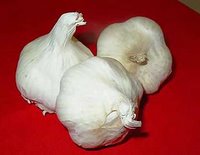 Richard Olney (scroll down to find him) recommends making a flour and water paste, which you form into a thin sausage shape and place over the rim of the pot: it makes a seal when you clamp on the lid. On the couple of occasions when I have tried this method, I have found that the lid -- which I may have clamped on too firmly -- has squeezed the pastry from the rim, rendering it entirely ineffective. Still, the lid of a Le Creuset fits quite tightly.
I used a whole, Label Anglais chicken. The advantage is that it is of higher quality than the thighs and drumsticks you can buy separately; the drawback is that the breast cooks for longer than is necessary, and may dry out and toughen. You could, if you were prepared to break the rule about lifting the lid of the pot, add the breast portions half an hour from the end.
Richard Ehrlich, in his engagingly helpful The Perfect . . . (also published by Grub Street, and featured on the page that advertises Olney's Simple French Food), says that you need "an absolutely disgraceful quantity" -- up to 300 ml -- of olive oil, in which the garlic cloves can stew. I am happy to let them steam.
The timings here suit my oval Le Creuset, which takes a long time to heat up. They also suit my taste for meat that falls off the bone -- but are not ideal for the breast meat.
1 chicken, cut into 8 pieces
4 heads garlic, separated into cloves
3 tbsp olive oil
Herbs: rosemary, thyme, tarragon (according to taste)
Salt, pepper
Toss the ingredients in a casserole. Bake, covered, at gas mark 4/180 C for one hour; and then at gas mark 1/140 C or lower for a further hour
Richard Olney (scroll down to find him) recommends making a flour and water paste, which you form into a thin sausage shape and place over the rim of the pot: it makes a seal when you clamp on the lid. On the couple of occasions when I have tried this method, I have found that the lid -- which I may have clamped on too firmly -- has squeezed the pastry from the rim, rendering it entirely ineffective. Still, the lid of a Le Creuset fits quite tightly.I used a whole, Label Anglais chicken. The advantage is that it is of higher quality than the thighs and drumsticks you can buy separately; the drawback is that the breast cooks for longer than is necessary, and may dry out and toughen. You could, if you were prepared to break the rule about lifting the lid of the pot, add the breast portions half an hour from the end.
Richard Ehrlich, in his engagingly helpful The Perfect . . . (also published by Grub Street, and featured on the page that advertises Olney's Simple French Food), says that you need "an absolutely disgraceful quantity" -- up to 300 ml -- of olive oil, in which the garlic cloves can stew. I am happy to let them steam.
The timings here suit my oval Le Creuset, which takes a long time to heat up. They also suit my taste for meat that falls off the bone -- but are not ideal for the breast meat.
1 chicken, cut into 8 pieces
4 heads garlic, separated into cloves
3 tbsp olive oil
Herbs: rosemary, thyme, tarragon (according to taste)
Salt, pepper
Toss the ingredients in a casserole. Bake, covered, at gas mark 4/180 C for one hour; and then at gas mark 1/140 C or lower for a further hour
Roast chicken breasts
When I roast a chicken, I am usually preparing several meals. There is the roast for that day; a preparation such as hash or curry with the leftover meat; and a soup or risotto with the stock that I'll make from the carcass. Another approach, more logical perhaps, is to cut up the chicken first, and use the pieces as you need them.
At the weekend, I got my butcher to cut a chicken into 10 pieces. I kept the backbone, using it with the neck to make a stock. I roasted the breasts; the next day, I made what Marcella Hazan calls a fricasse (there are other meanings of the term -- I'll describe this recipe later in the week) with the thighs, drumsticks and wings.
The breasts made a very simple meal. I wiped clean four flat mushrooms, cut them into fork-sized pieces, and tossed them with a tbsp of olive oil, a clove of chopped garlic, salt and pepper. I placed them in a roasting tin. I coated the chicken breasts with a little more oil, and placed them on top of the mushrooms. I squeezed over the juice of a lemon, and threw the hulls into the tin. I ground over a little more salt.
Chicken breast dries out and toughens very easily. A high temperature forces moisture from the meat; on the other hand, a low temperature will mean that the meat is thoroughly dry before it has cooked through. Rapid cooking is preferable. I roasted these breasts for 30 minutes at gas mark 6/200 C. That was probably five minutes longer than they needed.
We ate the chicken and mushrooms with mashed potato.
At the weekend, I got my butcher to cut a chicken into 10 pieces. I kept the backbone, using it with the neck to make a stock. I roasted the breasts; the next day, I made what Marcella Hazan calls a fricasse (there are other meanings of the term -- I'll describe this recipe later in the week) with the thighs, drumsticks and wings.
The breasts made a very simple meal. I wiped clean four flat mushrooms, cut them into fork-sized pieces, and tossed them with a tbsp of olive oil, a clove of chopped garlic, salt and pepper. I placed them in a roasting tin. I coated the chicken breasts with a little more oil, and placed them on top of the mushrooms. I squeezed over the juice of a lemon, and threw the hulls into the tin. I ground over a little more salt.
Chicken breast dries out and toughens very easily. A high temperature forces moisture from the meat; on the other hand, a low temperature will mean that the meat is thoroughly dry before it has cooked through. Rapid cooking is preferable. I roasted these breasts for 30 minutes at gas mark 6/200 C. That was probably five minutes longer than they needed.
We ate the chicken and mushrooms with mashed potato.
Chicken fricasse with vinegar
Cooking terms are slippery. In France, a "fricasse" (if I knew how to do an acute accent, I would put it on the "e") is usually a white stew, such as a blanquette. The fricasses in Marcella Hazan's Marcella's Kitchen (o.p. in the UK) would be, according to some other writers, sautes (again, the "e" should have an acute) -- except that there are authorities who insist that the sauce in a chicken saute should not cook with the meat.
This is what I did with the chicken pieces left over after I had roasted the breasts. Serves three.
2 chicken thighs, 2 drumsticks, 2 wings
Sunflower or groundnut oil
Flour, spread on a plate
Salt, black pepper
1 tbsp olive oil
1 tsp chopped rosemary
1 tsp chopped garlic
3 anchovy fillets
4 tbsp red or white wine vinegar
Heat a thin layer (1 or 2 tbsp) of sunflower or groundnut oil in a frying pan. Dredge the chicken pieces in the flour, and fry on a medium heat until golden and crisp, turning once. Do this in a couple of batches, if necessary. Transfer the browned chicken to a plate. Season with a little salt, and pepper according to taste.
In a casserole, warm the oil, and throw in the rosemary, garlic and anchovy fillets. When the anchovies have dissolved, pour in the vinegar, and let it simmer for a minute or two. Tip the chicken into the casserole, cover, and cook over a very low heat for about an hour, turning the chicken pieces from time to time.
In a heavy casserole with a tight-fitting lid, the stew should not dry out. If it does, add a tbsp or two of water. You might find that there is more liquid than you want -- about 3 tbsp of concentrated sauce for each person is about right. Transfer the chicken to a plate, and boil the sauce, uncovered, to reduce it.
This is what I did with the chicken pieces left over after I had roasted the breasts. Serves three.
2 chicken thighs, 2 drumsticks, 2 wings
Sunflower or groundnut oil
Flour, spread on a plate
Salt, black pepper
1 tbsp olive oil
1 tsp chopped rosemary
1 tsp chopped garlic
3 anchovy fillets
4 tbsp red or white wine vinegar
Heat a thin layer (1 or 2 tbsp) of sunflower or groundnut oil in a frying pan. Dredge the chicken pieces in the flour, and fry on a medium heat until golden and crisp, turning once. Do this in a couple of batches, if necessary. Transfer the browned chicken to a plate. Season with a little salt, and pepper according to taste.
In a casserole, warm the oil, and throw in the rosemary, garlic and anchovy fillets. When the anchovies have dissolved, pour in the vinegar, and let it simmer for a minute or two. Tip the chicken into the casserole, cover, and cook over a very low heat for about an hour, turning the chicken pieces from time to time.
In a heavy casserole with a tight-fitting lid, the stew should not dry out. If it does, add a tbsp or two of water. You might find that there is more liquid than you want -- about 3 tbsp of concentrated sauce for each person is about right. Transfer the chicken to a plate, and boil the sauce, uncovered, to reduce it.
Dolpettes of meat
Recipe books with precise, apparently fail-safe instructions are mostly modern phenomena. Earlier books required interpretation. Here is a recipe for "dolpettes of cold meat" from The Breakfast Book by Georgiana Hill (1865), one of three Victorian collections reproduced in The English Breakfast by Kaori O'Connor. (I reviewed The English Breakfast in the Guardian.)
"Prepare the meat as for a hash -- or some hashed meat that has become cold will answer for the purpose -- add to it some bread-crumbs, enough to stiffen the consistency, mix it together with the yolk of eggs, shape it into small balls, dip them into egg, roll them in bread-crumbs and grated parmesan cheese, and fry them brown. Glaze them or serve them with tomato sauce."
I had a cereal bowlful of cold chicken, which I chopped into small pieces. I seasoned it and mixed it with one egg yolk, and added breadcrumbs gradually, until the mixture was sticky and coherent. I formed the mixture into six balls, about the size of golfballs. With my new enthusiasm for breadcrumbing, I rolled the balls in flour, then in a beaten egg, then in breadcrumbs; I half-filled a saucepan with sunflower oil, heated it on a low to medium flame until a breadcrumb start sizzling in it, and deep-fried the dolpettes for about seven minutes, until brown.
You have to learn not to worry if the mixture threatens to fall apart. Mould the balls gently. Once breaded and frying, they cohere.
By chance, I later came across a recipe for "crochette di pollo" in The Food of Italy by Claudia Roden. You mix 300 g cooked chicken with a double strength bechamel made with 300 ml milk, and add an egg, 3 tbsp Parmesan, and nutmeg. I'd like some cayenne in there, too.
"Prepare the meat as for a hash -- or some hashed meat that has become cold will answer for the purpose -- add to it some bread-crumbs, enough to stiffen the consistency, mix it together with the yolk of eggs, shape it into small balls, dip them into egg, roll them in bread-crumbs and grated parmesan cheese, and fry them brown. Glaze them or serve them with tomato sauce."
I had a cereal bowlful of cold chicken, which I chopped into small pieces. I seasoned it and mixed it with one egg yolk, and added breadcrumbs gradually, until the mixture was sticky and coherent. I formed the mixture into six balls, about the size of golfballs. With my new enthusiasm for breadcrumbing, I rolled the balls in flour, then in a beaten egg, then in breadcrumbs; I half-filled a saucepan with sunflower oil, heated it on a low to medium flame until a breadcrumb start sizzling in it, and deep-fried the dolpettes for about seven minutes, until brown.
You have to learn not to worry if the mixture threatens to fall apart. Mould the balls gently. Once breaded and frying, they cohere.
By chance, I later came across a recipe for "crochette di pollo" in The Food of Italy by Claudia Roden. You mix 300 g cooked chicken with a double strength bechamel made with 300 ml milk, and add an egg, 3 tbsp Parmesan, and nutmeg. I'd like some cayenne in there, too.
A simple chicken
I am in France, under a clear blue sky. I want to cook something simple, for three reasons. The first is not to adulterate the excellent ingredients here. The second is the arrival of spring: one feels less of a need for sauces and whatnot. The third is that I do not have much in the house.
I have a very good chicken (a Poulet de Challans), though, and some potatoes described as "raclette" -- they are on the waxy end of the potato spectrum. The roasting tin is poor, so I anoint the bird with olive oil rather than butter, which would certainly burn. I wish I had remembered to buy garlic. The rosemary in the garden is flowery and unfragrant, but I use it anyway. I scatter over some coarse salt.
I start roasting at gas mark 6/200 C, for 20 minutes; that is 10 fewer than I would allot usually, because this oven is fierce. I turn down the dial to its lowest setting. I have no idea what temperature that is -- at least 130 C, I should think. I allow a roasting time of one hour and 50 minutes. (The chicken weighs about 1.8 kg. It cost 14 euros.)
Meanwhile, I peel the potatoes and slice them, lengthwise, about the width of two pound coins (two one-pound coins that is, not a two-pound coin). I soak them in water, and then pat them dry with paper towels, in an effort to get rid of some of the starch that might cause them to stick to the roasting tin. I scatter them around and under the chicken when there is about an hour of cooking time left.
I check again, 20 minutes later. Not much activity. This is when the cook starts to dither: do I keep faith that the temperature is high enough, or do I adjust the temperature? I move it up a notch, to 1.
I take out the chicken, and put it on a plate. There is sauce in the tin, but it will be sacrificed to the potatoes, which will absorb it. I stir them, turn up the oven to gas mark 6/200 C, and return them to brown, on a higher shelf, for about 20 minutes.
That's it. Chicken and potatoes. And a salad. Just a little leftover sauce. Perfect.
I have a very good chicken (a Poulet de Challans), though, and some potatoes described as "raclette" -- they are on the waxy end of the potato spectrum. The roasting tin is poor, so I anoint the bird with olive oil rather than butter, which would certainly burn. I wish I had remembered to buy garlic. The rosemary in the garden is flowery and unfragrant, but I use it anyway. I scatter over some coarse salt.
I start roasting at gas mark 6/200 C, for 20 minutes; that is 10 fewer than I would allot usually, because this oven is fierce. I turn down the dial to its lowest setting. I have no idea what temperature that is -- at least 130 C, I should think. I allow a roasting time of one hour and 50 minutes. (The chicken weighs about 1.8 kg. It cost 14 euros.)
Meanwhile, I peel the potatoes and slice them, lengthwise, about the width of two pound coins (two one-pound coins that is, not a two-pound coin). I soak them in water, and then pat them dry with paper towels, in an effort to get rid of some of the starch that might cause them to stick to the roasting tin. I scatter them around and under the chicken when there is about an hour of cooking time left.
I check again, 20 minutes later. Not much activity. This is when the cook starts to dither: do I keep faith that the temperature is high enough, or do I adjust the temperature? I move it up a notch, to 1.
I take out the chicken, and put it on a plate. There is sauce in the tin, but it will be sacrificed to the potatoes, which will absorb it. I stir them, turn up the oven to gas mark 6/200 C, and return them to brown, on a higher shelf, for about 20 minutes.
That's it. Chicken and potatoes. And a salad. Just a little leftover sauce. Perfect.
Southern fried chicken
Video Jug has a recipe for Southern fried chicken. In essence: you poach chicken drumsticks; you coat them in flour flavoured with cayenne, thyme and parsley; you deep-fry them.
It works well. I have a few comments, based on what happened when I tried it at the weekend.
The poaching. I used one stock cube, rather than two. I thought that otherwise the Knorr flavour would be too assertive in the resulting stock.
The coating. I used egg rather than buttermilk as an adhesive. Each drumstick gets, I should guess, about one tbsp of coating; the modest quantity of seasoning in this recipe is not going to add much flavour to the finished dish. Be more lavish, is my advice. For a crunchier coating, you could follow Simon Hopkinson's method: he suggests repeating the egging/flouring process three times.
The frying. I used sunflower oil. Groundnut oil, which is more neutral, might have been better.
It works well. I have a few comments, based on what happened when I tried it at the weekend.
The poaching. I used one stock cube, rather than two. I thought that otherwise the Knorr flavour would be too assertive in the resulting stock.
The coating. I used egg rather than buttermilk as an adhesive. Each drumstick gets, I should guess, about one tbsp of coating; the modest quantity of seasoning in this recipe is not going to add much flavour to the finished dish. Be more lavish, is my advice. For a crunchier coating, you could follow Simon Hopkinson's method: he suggests repeating the egging/flouring process three times.
The frying. I used sunflower oil. Groundnut oil, which is more neutral, might have been better.
Roast chicken salad
Composed salads belong to a large group of dishes for which recipes are merely templates. A salad is not a dustbin; but provided that the ingredients are harmonious, many variations on themes are possible. Obeying precise instructions is not in the spirit of the dish.
Still, recipes have their uses. The following is what I cooked (for four) last night, rather than a definitive recommendation.
750 g Jersey Royal potatoes
1 clove garlic
4 red peppers
1 tbsp red wine vinegar
3 tbsp olive oil
Salt, pepper
Left over meat from a 1.7 kg roast chicken (about half of it)
100 g black olives, pitted
Large handful flat-leaf parsley, chopped
2 Little Gem lettuces
Scrape the potatoes, cover with cold water in a saucepan, throw in the garlic clove, bring slowly to the boil, and simmer until tender. (There is more on cooking Jerseys here.)
Bake the peppers for 20 to 30 minutes at gas mark 8/230 C, until the skin is blackened and loose. When cool, peel and deseed, retaining the juices, and cut into strips.
Wash and dry the lettuce.
When the potatoes are tender, drain them, and fish out the garlic. Squeeze the garlic flesh from the husk, and -- in a salad bowl -- mash it, with salt and pepper, in the vinegar. Whisk in the oil until the vinaigrette is emulsified. Cut up the potatoes, and toss them gently in the vinaigrette. (If you do this when they are hot, they will absorb more dressing; they firm up as they cool.)
Stir in the meat, the peppers with their juices, the olives, parsley and lettuce leaves. Or you could lay the lettuce on plates, piling the rest of the salad on top.
Still, recipes have their uses. The following is what I cooked (for four) last night, rather than a definitive recommendation.
750 g Jersey Royal potatoes
1 clove garlic
4 red peppers
1 tbsp red wine vinegar
3 tbsp olive oil
Salt, pepper
Left over meat from a 1.7 kg roast chicken (about half of it)
100 g black olives, pitted
Large handful flat-leaf parsley, chopped
2 Little Gem lettuces
Scrape the potatoes, cover with cold water in a saucepan, throw in the garlic clove, bring slowly to the boil, and simmer until tender. (There is more on cooking Jerseys here.)
Bake the peppers for 20 to 30 minutes at gas mark 8/230 C, until the skin is blackened and loose. When cool, peel and deseed, retaining the juices, and cut into strips.
Wash and dry the lettuce.
When the potatoes are tender, drain them, and fish out the garlic. Squeeze the garlic flesh from the husk, and -- in a salad bowl -- mash it, with salt and pepper, in the vinegar. Whisk in the oil until the vinaigrette is emulsified. Cut up the potatoes, and toss them gently in the vinaigrette. (If you do this when they are hot, they will absorb more dressing; they firm up as they cool.)
Stir in the meat, the peppers with their juices, the olives, parsley and lettuce leaves. Or you could lay the lettuce on plates, piling the rest of the salad on top.
Chicken Basquaise
Making chicken stews such as this, I used to throw away the fat in which I had browned the chicken before proceeding with the rest of the dish. I still do that with beef and lamb stews. But chicken can be browned at lower temperatures, so the fat is less likely to burn; and it seems a shame to throw away anything flavourful.
I made this dish, for two, in a Le Creuset casserole.
1 dstsp olive oil
4 chicken thighs
I onion, sliced
2 cloves garlic, chopped
1 bay leaf
4 plum tomatoes, blanched for 20 seconds in boiling water, peeled and chopped
1 red and 1 yellow pepper, deseeded and cut into pieces
Salt
You need only a little oil, because the chicken will exude fat. Warm it over a gentle heat, and add the chicken pieces, skin side down. Sizzle them, taking care that the pan does not get hot enough to burn the oil, for about 10 minutes each side, or until browned. Remove to a plate.
Tip the onions, garlic and bay leaf into the casserole, and soften for five minutes. Add the tomatoes (you do not have to skin them -- it depends whether you are bothered about finding skins in the finished dish), peppers, and salt to taste. Nestle the chicken pieces among the other ingredients, bring to a simmer, and bubble gently, with the pan uncovered, for about an hour.
You will find at first that the chicken is sitting on ingredients that have not merged into a sauce. Do not worry: they will soften and give up a lot of moisture as they cook. You may find that the sauce is still too liquid after an hour: remove the chicken pieces to a plate, put them in a warm oven, and turn up the heat under the casserole to bubble the sauce fiercely and thicken it. (Chicken legs do not toughen easily, but they are probably best kept away from fast-boiling at this stage.) Return the chicken to the pan for a couple of minutes, and serve.
I made this dish, for two, in a Le Creuset casserole.
1 dstsp olive oil
4 chicken thighs
I onion, sliced
2 cloves garlic, chopped
1 bay leaf
4 plum tomatoes, blanched for 20 seconds in boiling water, peeled and chopped
1 red and 1 yellow pepper, deseeded and cut into pieces
Salt
You need only a little oil, because the chicken will exude fat. Warm it over a gentle heat, and add the chicken pieces, skin side down. Sizzle them, taking care that the pan does not get hot enough to burn the oil, for about 10 minutes each side, or until browned. Remove to a plate.
Tip the onions, garlic and bay leaf into the casserole, and soften for five minutes. Add the tomatoes (you do not have to skin them -- it depends whether you are bothered about finding skins in the finished dish), peppers, and salt to taste. Nestle the chicken pieces among the other ingredients, bring to a simmer, and bubble gently, with the pan uncovered, for about an hour.
You will find at first that the chicken is sitting on ingredients that have not merged into a sauce. Do not worry: they will soften and give up a lot of moisture as they cook. You may find that the sauce is still too liquid after an hour: remove the chicken pieces to a plate, put them in a warm oven, and turn up the heat under the casserole to bubble the sauce fiercely and thicken it. (Chicken legs do not toughen easily, but they are probably best kept away from fast-boiling at this stage.) Return the chicken to the pan for a couple of minutes, and serve.
Chicken salad
This is the very basic chicken salad, made with what was left from the weekend's shopping, that we ate last night. The cherry tomatoes were sweet, English ones from the local greengrocer, and were in a different league from any -- no matter how superficially attractive -- I have bought from a supermarket.
I often include roasted peppers in salads such as this. Put them in the oven at the highest heat for 20 to 25 minutes, until the skin chars; allow to cool, peel, deseed and slice.
For two.
8 medium Jersey Royal potatoes
I garlic clove
1 dstsp red wine vinegar
3 dstsp olive oil
Salt, pepper
2 portions roast chicken pieces
Handful flat-leaf parsley, chopped
16 cherry tomatoes, halved
Scrape and halve the potatoes (or cut them into thirds, if they seem large), put them with the garlic clove into a saucepan of cold water, bring slowly to the boil, and cook at a gentle simmer until tender. This gentle cooking helps the potatoes to retain a firm texture, as does the omission of salt. Drain; if you like, cut the potatoes into smaller pieces.
Squeeze the boiled garlic from its hull, and mash it into the vinegar in a salad bowl, with some salt and black pepper. (Raw garlic in a salad is of course more assertive.) Whisk in the oil. Turn the potatoes in this dressing; they tighten in texture as they cool, but they will absorb a good deal of dressing if they are still hot. Stir in the other ingredients.
I often include roasted peppers in salads such as this. Put them in the oven at the highest heat for 20 to 25 minutes, until the skin chars; allow to cool, peel, deseed and slice.
For two.
8 medium Jersey Royal potatoes
I garlic clove
1 dstsp red wine vinegar
3 dstsp olive oil
Salt, pepper
2 portions roast chicken pieces
Handful flat-leaf parsley, chopped
16 cherry tomatoes, halved
Scrape and halve the potatoes (or cut them into thirds, if they seem large), put them with the garlic clove into a saucepan of cold water, bring slowly to the boil, and cook at a gentle simmer until tender. This gentle cooking helps the potatoes to retain a firm texture, as does the omission of salt. Drain; if you like, cut the potatoes into smaller pieces.
Squeeze the boiled garlic from its hull, and mash it into the vinegar in a salad bowl, with some salt and black pepper. (Raw garlic in a salad is of course more assertive.) Whisk in the oil. Turn the potatoes in this dressing; they tighten in texture as they cool, but they will absorb a good deal of dressing if they are still hot. Stir in the other ingredients.
Broccoli soup
What to cook when you arrive home at 9 p.m., with a few glasses of wine inside you? Nothing that involves much time and effort. Last night, I did not want to order a pizza, because there was plenty of food in the house; and I did not want anything wheat-based (pasta, bread and hummus), because I had eaten toast for breakfast and sandwiches for lunch. I wanted vegetables.
I am a little wary of broccoli or cauliflower soups. You have to soften the vegetables; like all brassicas, they acquire a rank quality if overcooked. But this one worked well. It might have served 2; I consumed it all, in two mugfuls with a spoon for the thicker bits, in front of a tape of Timbo's sad Wimbledon exit.
3 ladles chicken stock
I head broccoli, divided into small florets
I spring onion (head and all but toughest of green parts), chopped
Knob of butter
Salt, black pepper, cayenne pepper to taste
2 tbsp double cream
Bring the stock to a simmer in a saucepan, with a little salt. Throw in the broccoli and simmer, uncovered, for about 10 minutes, or until tender. The broccoli will not be completely submerged; that does not matter, if you stir the contents of the pan from time to time. I leave the pan uncovered for two reasons: to concentrate the flavour of the stock; and because of my theory, never properly tested, that vegetable soups have a fresher flavour if cooked in this way.
Meanwhile, in a separate pan and over a gentle heat, soften the spring onion in the butter. (You use two pans simply to save time.) Tip in the broccoli and stock, and blend with a hand blender; or blend the soup by passing it through a vegetable mill, or by whizzing it in a blender. (I prefer the rougher texture that the hand blender gives.) Add the cream, more salt if necessary, and as much of the pepper or two types of pepper as you like. Warm the soup gently, and serve.
I am a little wary of broccoli or cauliflower soups. You have to soften the vegetables; like all brassicas, they acquire a rank quality if overcooked. But this one worked well. It might have served 2; I consumed it all, in two mugfuls with a spoon for the thicker bits, in front of a tape of Timbo's sad Wimbledon exit.
3 ladles chicken stock
I head broccoli, divided into small florets
I spring onion (head and all but toughest of green parts), chopped
Knob of butter
Salt, black pepper, cayenne pepper to taste
2 tbsp double cream
Bring the stock to a simmer in a saucepan, with a little salt. Throw in the broccoli and simmer, uncovered, for about 10 minutes, or until tender. The broccoli will not be completely submerged; that does not matter, if you stir the contents of the pan from time to time. I leave the pan uncovered for two reasons: to concentrate the flavour of the stock; and because of my theory, never properly tested, that vegetable soups have a fresher flavour if cooked in this way.
Meanwhile, in a separate pan and over a gentle heat, soften the spring onion in the butter. (You use two pans simply to save time.) Tip in the broccoli and stock, and blend with a hand blender; or blend the soup by passing it through a vegetable mill, or by whizzing it in a blender. (I prefer the rougher texture that the hand blender gives.) Add the cream, more salt if necessary, and as much of the pepper or two types of pepper as you like. Warm the soup gently, and serve.
Spare ribs
My latest New Statesman column concerns my fear of barbecues. Great food; a sense of satisfaction in producing it; too much to worry about. I might have mentioned a further reason for treating this method of cooking with caution: the current weather. It is very depressing to light the charcoal, wait 45 minutes for it all to glow, put the food on it, and watch as everything gets drenched.
I was cooking for myself at the weekend, and had found a small rack of spare ribs. The oven was the ideal place in which to cook them. I made a marinade with about 2 tsp each of nam pla (fish sauce), soy sauce, rice vinegar, and groundnut oil, along with a third of a tsp of chilli powder as well as a clove of garlic, mashed to a pulp with some salt. I poured the liquid over the ribs on a baking sheet, and baked them at gas mark 1/140 C for 30 minutes, and at gas mark S/130 C for a further 30 minutes. The soy sauce caramelises, and would burn at a higher temperature; the low heat also keeps the meat tender.
I turned off the oven, left the ribs in there for 15 minutes, and ate them with my hands.
I was cooking for myself at the weekend, and had found a small rack of spare ribs. The oven was the ideal place in which to cook them. I made a marinade with about 2 tsp each of nam pla (fish sauce), soy sauce, rice vinegar, and groundnut oil, along with a third of a tsp of chilli powder as well as a clove of garlic, mashed to a pulp with some salt. I poured the liquid over the ribs on a baking sheet, and baked them at gas mark 1/140 C for 30 minutes, and at gas mark S/130 C for a further 30 minutes. The soy sauce caramelises, and would burn at a higher temperature; the low heat also keeps the meat tender.
I turned off the oven, left the ribs in there for 15 minutes, and ate them with my hands.
Spaghetti or spaghettini and sardines
This -- simply a variation on the sardines and rice I made recently -- is a store-cupboard dish. (Of course, it would be even nicer with fresh sardines, grilled or roasted.) Tinned sardines want only gentle warming. If you cook them, they melt, as do anchovies. The dried fruit/pine kernels/chilli theme is one I return to often: of North African origin, it is a feature of the food of Sicily. Parmesan is inappropriate with seafood pasta and rice dishes, the books insist.
These quantities are for each person.
1 slice white bread, whizzed into crumbs
Olive oil
125 g spaghetti or spaghettini
1 tin sardines
1 handful raisins
1 handful pine kernels
1 handful flat-leaf parsley, chopped
1 dried chilli, whizzed (I use more)
Put a thin layer of olive oil into a saucepan, warm it, and fry the breadcrumbs over a low heat until golden. You need to keep stirring them. Set aside. (The pan will carry on cooking them for a while after the heat goes off, so if you are worried about burning, tip the breadcrumbs into a bowl.)
In a small, dry saucepan, toast the pine kernels over a low heat, again stirring watchfully. Set these aside too.
Bring a pan of water to the boil. Pour a ladleful of the boiling water over the raisins in a bowl. Add a generous portion of salt (about a tsp for each litre of water) to the pan, and stir in the pasta. Use the packet instructions as a guide, but start testing the pasta for doneness at least a minute before the packet suggests it should be ready. Drain it when it is edible but retains some firmness at the centre. Remember that it will retain enough heat to carry on cooking for a while.
Meanwhile, drain the sardines of their oil, and warm them through in a saucepan over a very low heat with a dstsp or so of your own oil (which will be nicer than the stuff in the tin). Throw in the drained raisins (soaked for about 10 minutes), pine kernels, parsley and chilli. Toss this sauce with the spaghetti, breaking up the sardines. Serve with the breadcrumbs scattered on top.
These quantities are for each person.
1 slice white bread, whizzed into crumbs
Olive oil
125 g spaghetti or spaghettini
1 tin sardines
1 handful raisins
1 handful pine kernels
1 handful flat-leaf parsley, chopped
1 dried chilli, whizzed (I use more)
Put a thin layer of olive oil into a saucepan, warm it, and fry the breadcrumbs over a low heat until golden. You need to keep stirring them. Set aside. (The pan will carry on cooking them for a while after the heat goes off, so if you are worried about burning, tip the breadcrumbs into a bowl.)
In a small, dry saucepan, toast the pine kernels over a low heat, again stirring watchfully. Set these aside too.
Bring a pan of water to the boil. Pour a ladleful of the boiling water over the raisins in a bowl. Add a generous portion of salt (about a tsp for each litre of water) to the pan, and stir in the pasta. Use the packet instructions as a guide, but start testing the pasta for doneness at least a minute before the packet suggests it should be ready. Drain it when it is edible but retains some firmness at the centre. Remember that it will retain enough heat to carry on cooking for a while.
Meanwhile, drain the sardines of their oil, and warm them through in a saucepan over a very low heat with a dstsp or so of your own oil (which will be nicer than the stuff in the tin). Throw in the drained raisins (soaked for about 10 minutes), pine kernels, parsley and chilli. Toss this sauce with the spaghetti, breaking up the sardines. Serve with the breadcrumbs scattered on top.
Spaghettini and courgettes
Professional food writers, if the evidence of their work is to be trusted, cook different things almost every day, keeping themselves endlessly supplied with new recipes. At the same time, they imply that their recipes are for dishes that they cook regularly ("We always have this with . . ."; "This is a favourite in our family . . ."). We home cooks tend to return to standbys. I do so particularly when I cook for myself. So: pasta again, for the second time in a week, with courgettes. There are similar recipes here and here.
Courgettes become soggy when they cook in liquid. For this reason, writers such as Richard Olney (you'll find his great work Simple French Food here if you scroll down) suggest cooking them at a high heat, so that the liquid evaporates immediately. I am not usually so punctilious.
For this dish, I put my two small courgettes, sliced into thin rounds, into a medium saucepan with a chopped clove of garlic, some dried chilli (whizzed), a little salt and a splash of olive oil, and cooked them over a medium heat, stirring regularly, for about seven minutes. You can tell when they're cooked: their white centres moisten and turn green. I added about three tbsp of double cream, bubbled it for a minute or so until thickened, and tossed this sauce into 125 g of cooked spaghettini. I sprinkled some Parmesan on top.
Courgettes become soggy when they cook in liquid. For this reason, writers such as Richard Olney (you'll find his great work Simple French Food here if you scroll down) suggest cooking them at a high heat, so that the liquid evaporates immediately. I am not usually so punctilious.
For this dish, I put my two small courgettes, sliced into thin rounds, into a medium saucepan with a chopped clove of garlic, some dried chilli (whizzed), a little salt and a splash of olive oil, and cooked them over a medium heat, stirring regularly, for about seven minutes. You can tell when they're cooked: their white centres moisten and turn green. I added about three tbsp of double cream, bubbled it for a minute or so until thickened, and tossed this sauce into 125 g of cooked spaghettini. I sprinkled some Parmesan on top.
High Performance MySQL: Optimization, Backups, Replication, and More
eBook Description
eBook Details
Publisher O'Reilly Media
Release Date June 26, 2008
ISBN 0596101716
Download eBook link
High Performance MySQL is the definitive guide to building fast, reliable systems with MySQL. Written by noted experts with years of real-world experience building very large systems, this book covers every aspect of MySQL performance in detail, and focuses on robustness, security, and data integrity. High Performance MySQL teaches you advanced techniques in depth so you can bring out MySQL's full power. Learn how to design schemas, indexes, queries and advanced MySQL features for maximum performance, and get detailed guidance for tuning your MySQL server, operating system, and hardware to their fullest potential. You'll also learn practical, safe, high-performance ways to scale your applications with replication, load balancing, high availability, and failover. This second edition is completely revised and greatly expanded, with deeper coverage in all areas. Major additions include: Emphasis throughout on both performance and reliability Thorough coverage of storage engines, including in-depth tuning and optimizations for the InnoDB storage engine Effects of new features in MySQL 5.0 and 5.1, including stored procedures, partitioned databases, triggers, and views A detailed discussion on how to build very large, highly scalable systems with MySQL New options for backups and replication Optimization of advanced querying features, such as full-text searches Four new appendices The book also includes chapters on benchmarking, profiling, backups, security, and tools and techniques to help you measure, monitor, and manage your MySQL installations.
eBook Details
Publisher O'Reilly Media
Release Date June 26, 2008
ISBN 0596101716
Download eBook link
http://www.ziddu.com/downloadlink/2189117/High-Performance-MySQL-Second-Edition.rar
Credit Card free download book
Credit card is something important that most people should have. Even some people have 2 or more credit cards. They often to use their credit card almost on all of financial transaction, from paying their phone bill to buy gasoline. But credit card has to be used wisely because if it's not you will get serious financial problem. Avoid consumptive credit card usage and calculate it how much you should use it a month. Where to get important information about credit card and learn to use it as versatile financial tool and how to make it to make your life easier? Well, in internet you can find hundreds of articles about it, but make sure its from trusty sources. A well known company which helps people to get more understanding about credit card and the most important thing is, this company helps people to improve their credit score and assist you to choose low APR credit cards online.
Please visit extracreditcards for full guide on things around credit cards and have better understanding about it. You can also make an online credit card application which it will be a 100% guaranteed approval. Choosing the right credit card and use it wisely, that's the key from avoiding getting financial trouble.
Professional ASP.NET 3.5: In C# and VB free download book

eBook Description
Simply put, you will find that ASP.NET 3.5 is an amazing technology to use to build your Web solutions! When ASP.NET 1.0 was introduced in 2000, many considered it a revolutionary leap forward in the area of Web application development. ASP.NET 2.0 was just as exciting and revolutionary and ASP.NET 3.5 is continuing a forward march in providing the best framework today in building applications for theWeb. Although the foundation of ASP.NET was laid with the release of ASP.NET 1.0, ASP.NET 3.5 continues to build on this foundation by focusing on the area of developer productivity.
This book covers the whole of ASP.NET. It not only introduces new topics, it also shows you examples of these new technologies in action. So sit back, pull up that keyboard, and let’s have some fun!
This book covers the whole of ASP.NET. It not only introduces new topics, it also shows you examples of these new technologies in action. So sit back, pull up that keyboard, and let’s have some fun!
eBook Details
Publisher Wrox
Release Date March 4, 2008
ISBN 0470187573
Download eBook link
http://www.ziddu.com/downloadlink/2152601/Programming-dot-NET3-5.part1.rar
http://www.ziddu.com/downloadlink/2152622/Programming-dot-NET3-5.part2.rar
Poker Online free download book
Play poker online is one of the most favorite games in internet, people around the world play it regularly. Some people used to play just for fun while the others expecting extra cash from the game. Whatever you play for, you can read useful information about online poker at onlinepokertutor.com.
There are some techniques which you can use to achieve higher skill on online poker and finally you can win. For beginner, you should learn first about poker basic strategies once you understand then learn on advanced poker techniques such as how to bluff your enemy and many other strategies. If you feel you have enough performance, it's time to make money, join with the available poker rooms which you can read each poker room review on onlinepokertutor.com.
Choose online poker room only from the list and room rating which have been given. Because some of online poker room can be a scam and you can lose your money if you are not careful. But you always remind yourself that gambling is not a good way to earn money, only very few people who actually get rich but most of them lose their money and their life get worst. It needs years of learning and experiences to get advanced gambling skill and cannot be achieved instantly.
Online Casino powered by Microgaming Software
Spin Palace id the right place for them who like to play games through an on line way and for them who are the real gamblers actually. Here, this is the only one place actually to get satisfy when you want something fabulous for your games. You can do the gambling here. If you can click this site, you will be amaze so much how can this site fulfill your need about the things of greatest of casino. Form the earlier and the most up to date games are here. All the things here is done through an Internet. It surely will satisfy you most in getting and playing the games you like.
This is not the illegal one, but for the opposite, it has license and you can do the gambling ads you like. The games on line is just based on it software actually. Just do not worry because the site also provide you with the software of all games you want. Especially for the casino, black jack, and many more. Just see the site and enjoy the new gambling by this. You can also get the bonus if you are lucky and know well how to do gamble. Have a nice try for this thing.
Casino Guidance for Newbie free download book
May be for several people, they have not already knew well about the casino games. As you all know, playing this games need both lie the lucky and for the creativity. You cannot play it haphazardly. You have to make sure that you can play it against your foe. For you, who ar4e the young gamblers or who is trying to be th real gamblers, first you must see for the http://www.casinonewbies.com Why should that site? The site has all the best thing you need most about how getting well about the term of casino games.
You do not need to make any moves to go to for somewhere else because this is actually from the on line way. Here, you will be displayed about all the things pf casino starting for the guide, the reviews, and also the trainer for your how you can play casino it will not waste your time and energy but you will be helped so due to the services. As a complete and appropriate site to be a real gambler, this site has already been a most wanted for the beginner of gambler. Sp, just see the site and get the incredible information about how to be a good gambler in casino games.
Google Apps Hacks free download book

Overview
Can Google applications really become an alternative to the venerable Microsoft Office suite? Conventional wisdom may say no, but practical wisdom says otherwise. Right now, 100,000 small businesses are currently running trials of Google office applications. So are large corporations such as General Electric and Proctor & Gamble. Google Apps Hacks gets you in on the action with several ingenious ways to push Google's web, mobile, and desktop apps to the limit. The scores of clever hacks and workarounds in this book help you get more than the obvious out of a whole host of Google's web-based applications for word processing, spreadsheets, PowerPoint-style presentations, email, calendar, and more by giving you ways to exploit the suite's unique network functionality. You get plenty of ways to tinker with:
- Google Documents -- Share and edit documents with others in real time, view them on the run with Google Docs mobile service, and use Google Notebook for web research
- Google Spreadsheets -- Add real-time data to spreadsheets, and generate charts and tables you can embed in web pages
- Google Presentations -- View them on a mobile phone and save them as video
- Gmail -- Send email to and from a mobile phone, adjust Gmail's layout with a style sheet, and a lot more
- iGoogle -- Create your own gadgets, program a screenscraper, add Flash games, and more
- Google Calendar -- Add web content events, public calendars, and your Outlook Calendar to this application
- Google Reader, Google Maps, Google Earth, and Google SketchUp: the new 3D modeling software tool
- Picasa, YouTube, and Google Video -- discover new ways to customize and use these media management apps
In addition, Google Apps Hacks outlines ways you can create a simple web site with nothing but Google tools, including Page Creator, Blogger, Google Analytics, and content from other Google apps. This amazing collection just might convince you that Microsoft Office is not the last word in business applications. The price is certainly right.
eBook Details
Publisher Make Books
Release Date April 16, 2008
ISBN 059651588X
Download eBook link
http://www.ziddu.com/downloadlink/2219159/Google-Apps-Hacks.rar
Active Directory For Dummies free download book

eBook Description
Welcome to the wonderful world of Active Directory! Over the last eight years since Active Directory (AD) was released in Microsoft’s Windows 2000 Server product, AD has become one of the most (if not the most) popular directory service products in the world. It has also become one of the central technologies on top of which many other Microsoft products are built. If you are an Information Technology (IT) professional who designs and supports directory services or solutions created with Microsoft products, then you really need to have an understanding of what AD is and how it works. That’s where this book comes in.
This free Active Directory ebook is to take the anxiety and stress out of mastering this complex technology. I hope that you find the book a clear, straightforward resource for exploring Active Directory.
eBook Details
Publisher For Dummies
Release Date August 11, 2008
ISBN 0470287209
Download eBook link
http://www.ziddu.com/downloadlink/2219235/Active-Directory-For-Dummies.rar
Tuesday, August 12, 2008
free download book Mashed Charlottes
After quite a few helpings of crushed new potatoes, I felt that it was time for a change. We were eating grilled chicken, a plain dish that could take a rich accompaniment. I decided to cook the Charlottes in the usual way (brought slowly to a gentle simmer), in their skins, and to pass them through a vegetable mill, mashing them with cream and butter (warmed first in a small saucepan). The mill would catch the skins, I figured. I was wrong; the mash was decorated with tiny speckles. No matter.
Waxy potatoes are not ideal for mashing. They can become gluey. But sometimes a moderate glueyness -- just enough to give the mash a stiff texture -- can be pleasant, particularly if offset by buttery creaminess. I was generous with the butter and cream.
Waxy potatoes are not ideal for mashing. They can become gluey. But sometimes a moderate glueyness -- just enough to give the mash a stiff texture -- can be pleasant, particularly if offset by buttery creaminess. I was generous with the butter and cream.
free download book Grilled chicken breast
Lean meat such as chicken breast toughens if cooked for too long. The breasts sold as "chicken supremes", usually with a piece of wing bone attached, are thick at the wing end; the heat of a grill chars their outsides quickly, but is slow to invade further. It is worth cutting them into three or four portions. There is a flap of meat that you can slice off; you can then slice off another portion at the rear, thinner end; and slice through the breast at the thick end to produce portions about 50 mm thick.
The amount of flavour imparted to meat by long marinating is often overrated. I usually soak the breasts for about half an hour: perhaps (for two supremes) in the juice of half a lemon, a good glug of olive oil, and a clove of garlic, crushed with a little salt.
You could simply fry the breasts in this marinade, although you would risk burning the garlic. Or you could scrape off the marinade, and cook the chicken on a ridged grill pan or on a dry frying pan. Get the pan hot over a medium heat, and turn the breasts several times as you cook, so that the outsides do not burn before the heat penetrates the centres. They should take about five minutes.
The amount of flavour imparted to meat by long marinating is often overrated. I usually soak the breasts for about half an hour: perhaps (for two supremes) in the juice of half a lemon, a good glug of olive oil, and a clove of garlic, crushed with a little salt.
You could simply fry the breasts in this marinade, although you would risk burning the garlic. Or you could scrape off the marinade, and cook the chicken on a ridged grill pan or on a dry frying pan. Get the pan hot over a medium heat, and turn the breasts several times as you cook, so that the outsides do not burn before the heat penetrates the centres. They should take about five minutes.
free download book Lentil soup
My latest New Statesman column concerns cooking with miscellaneous items of food that need using up. If you have fastidious tastes, you may find it difficult to assemble meals in this way. If you are not too fussy, you can create all sorts of dishes that, while not deserving to be commemorated in recipes, will be perfectly good to eat. And the amount of food you throw in the bin will diminish.
The lentil soup builds on a template that I rely on a lot. You simmer the lentils, perhaps with a garlic clove that will later, minus the husk, be mashed into the soup; you sweat onions, garlic and possibly other vegetables in olive oil; you combine these vegetables with the lentils, and puree the soup (I mostly use a hand blender). The alternative is do it all in one pan, starting with the aromatic vegetables and adding the lentils and the stock to them. Version one takes less time. The other advantage is that you are not cooking these vegetables for so long. Simmered until the lentils have softened, they can lose their freshness of flavour.
The lentil soup builds on a template that I rely on a lot. You simmer the lentils, perhaps with a garlic clove that will later, minus the husk, be mashed into the soup; you sweat onions, garlic and possibly other vegetables in olive oil; you combine these vegetables with the lentils, and puree the soup (I mostly use a hand blender). The alternative is do it all in one pan, starting with the aromatic vegetables and adding the lentils and the stock to them. Version one takes less time. The other advantage is that you are not cooking these vegetables for so long. Simmered until the lentils have softened, they can lose their freshness of flavour.
free download book Chicken and fennel
This very simple recipe is based on one in Jane Grigson's Vegetable Book. She recommends cooking the fennel for about seven minutes before baking it with the chicken. I followed that advice, but I am not sure that it was necessary: the fennel had plenty of time to soften and sweeten in the oven. Her recipe includes a spatchcocked chicken; I, cooking for three, used thighs and drumsticks. That was an advantage, because it enabled me to adjust the oven temperature without worrying about drying out breast meat.
Fennel -- 1 to 2 bulbs a person
Knob of butter
150 ml hot water or stock
A chicken thigh and drumstick for each person
Salt and pepper
Remove discoloured leaves as well as tops and fronds (you can use them to flavour the sauce in the pan) from the fennel. Slice the bulbs about 5 mm thick from the tops through the roots. Lay them in a roasting tray with the butter, pour over the hot water or stock, lay the chicken pieces on top, season, and bake in a gas mark 4/180 C oven for about an hour.
You want the chicken to brown and the liquid to reduce to create a couple of tbsps of flavoursome sauce for each person. You may have to turn the oven dial up or down to achieve those results. If the sauce dries up, add a little more liquid. If the chicken and fennel are cooked and there is too much sauce, strain it into a small saucepan and bubble it on the hob to reduce it, meanwhile keeping the roasting pan in a warm oven.
Fennel -- 1 to 2 bulbs a person
Knob of butter
150 ml hot water or stock
A chicken thigh and drumstick for each person
Salt and pepper
Remove discoloured leaves as well as tops and fronds (you can use them to flavour the sauce in the pan) from the fennel. Slice the bulbs about 5 mm thick from the tops through the roots. Lay them in a roasting tray with the butter, pour over the hot water or stock, lay the chicken pieces on top, season, and bake in a gas mark 4/180 C oven for about an hour.
You want the chicken to brown and the liquid to reduce to create a couple of tbsps of flavoursome sauce for each person. You may have to turn the oven dial up or down to achieve those results. If the sauce dries up, add a little more liquid. If the chicken and fennel are cooked and there is too much sauce, strain it into a small saucepan and bubble it on the hob to reduce it, meanwhile keeping the roasting pan in a warm oven.
free download book Bacon and broad bean salad
For two, I used about eight pods of broad beans, a small packet of rocket, about 12 new potatoes, a clove of garlic, and four slices of unsmoked streaky bacon.
I cooked the podded beans in boiling water for about eight minutes. When they were cool, I slipped them from their grey-green sheaths.
I simmered the potatoes slowly, according to the instructions here, with the unpeeled garlic clove.
Meanwhile, the bacon was sizzling very gently on a ridged grill pan. It took about 25 minutes to crisp. Only when you have cooked bacon this slowly -- there is more about the process here -- do you appreciate how much fat it contains. I did not throw away the fat, but used it for the salad dressing, with one tbsp of red wine vinegar into which I had mashed the softened garlic clove, 1 tbsp of olive oil, and salt and pepper.
In this dressing, I tossed the potatoes (which I had sliced), the bacon cut into pieces, the rocket and the broad beans. I have to admit that I added some cubes of cheddar cheese too; but the salad would have been better without them.
I cooked the podded beans in boiling water for about eight minutes. When they were cool, I slipped them from their grey-green sheaths.
I simmered the potatoes slowly, according to the instructions here, with the unpeeled garlic clove.
Meanwhile, the bacon was sizzling very gently on a ridged grill pan. It took about 25 minutes to crisp. Only when you have cooked bacon this slowly -- there is more about the process here -- do you appreciate how much fat it contains. I did not throw away the fat, but used it for the salad dressing, with one tbsp of red wine vinegar into which I had mashed the softened garlic clove, 1 tbsp of olive oil, and salt and pepper.
In this dressing, I tossed the potatoes (which I had sliced), the bacon cut into pieces, the rocket and the broad beans. I have to admit that I added some cubes of cheddar cheese too; but the salad would have been better without them.
free download book Cold curried chicken
We had a street party on Saturday. I bought a large chicken, thinking that I might make coronation chicken; but none of the books on my kitchen shelf included the recipe. As I thought about it, I realised that recipes I had seen included mango chutney -- which I did not have. So I decided to improvise something on a similar theme. People seemed to like it.
As I say, this is an improvised recipe: the brand of curry powder is not an essential detail. I mention the one I used both because it is very good and because the quantity is based on the packet advice. Your brand may work differently. I made a light stock with the neck giblet and a carrot because they were the ingredients to hand; if there had been an onion in the house, I would have used that as well.
1 chicken, 2.2 kg
Olive oil
Salt, pepper
1 lemon
1 neck giblet
1 carrot, peeled
2 cloves garlic, chopped
6 tsp Seasoned Pioneers Sri Lankan curry powder
1 200 g tub Greek yoghurt
1 200 g jar mayonnaise
Preheat the oven to gas mark 6/200 C. Rub the chicken with a little olive oil, season it, squeeze half the lemon over it, and put the hull with the other half into the cavity. Roast for 30 minutes. Turn the oven down to gas mark 1/140 C, and roast for a further hour and 30 minutes. Baste from time to time if you like; basting gives the skin an appetisingly mottled and burnished appearance. (There is more on roasting chickens here.)
Pour water over the giblet in a small saucepan, add the peeled carrot, and simmer on a very low flame for an hour.
Remove the chicken from the oven and allow to cool. It should have produced some sauce; tip this into a bowl, and deglaze the roasting pan with a little water over a medium heat, scraping up the sediments. Add this liquid to the bowl.
Fat will rise to the top of this sauce. Discard all but a tbsp of it, with a spoon at first and then by applying strips of paper towel to the surface. In a small saucepan, soften the garlic in the reserved fat over a gentle heat, and add the curry powder, stirring and cooking it for about a minute. Pour in the sauce from the chicken and the stock, simmering until the mixture has reduced to a syrupy consistency.
Tear the meat off the chicken with your hands, reserving the carcass for stock. The curry sauce may have thickened further as it cools; loosen it a little with the juices that come out of the chicken.
In a large bowl, mix the curry sauce with the yoghurt and the mayonnaise. Fold in the chicken. Test the seasoning.
As I say, this is an improvised recipe: the brand of curry powder is not an essential detail. I mention the one I used both because it is very good and because the quantity is based on the packet advice. Your brand may work differently. I made a light stock with the neck giblet and a carrot because they were the ingredients to hand; if there had been an onion in the house, I would have used that as well.
1 chicken, 2.2 kg
Olive oil
Salt, pepper
1 lemon
1 neck giblet
1 carrot, peeled
2 cloves garlic, chopped
6 tsp Seasoned Pioneers Sri Lankan curry powder
1 200 g tub Greek yoghurt
1 200 g jar mayonnaise
Preheat the oven to gas mark 6/200 C. Rub the chicken with a little olive oil, season it, squeeze half the lemon over it, and put the hull with the other half into the cavity. Roast for 30 minutes. Turn the oven down to gas mark 1/140 C, and roast for a further hour and 30 minutes. Baste from time to time if you like; basting gives the skin an appetisingly mottled and burnished appearance. (There is more on roasting chickens here.)
Pour water over the giblet in a small saucepan, add the peeled carrot, and simmer on a very low flame for an hour.
Remove the chicken from the oven and allow to cool. It should have produced some sauce; tip this into a bowl, and deglaze the roasting pan with a little water over a medium heat, scraping up the sediments. Add this liquid to the bowl.
Fat will rise to the top of this sauce. Discard all but a tbsp of it, with a spoon at first and then by applying strips of paper towel to the surface. In a small saucepan, soften the garlic in the reserved fat over a gentle heat, and add the curry powder, stirring and cooking it for about a minute. Pour in the sauce from the chicken and the stock, simmering until the mixture has reduced to a syrupy consistency.
Tear the meat off the chicken with your hands, reserving the carcass for stock. The curry sauce may have thickened further as it cools; loosen it a little with the juices that come out of the chicken.
In a large bowl, mix the curry sauce with the yoghurt and the mayonnaise. Fold in the chicken. Test the seasoning.
free download book Pork stir-fry with rice
I do not cook stir-fries as you are supposed to, in a scorching wok with smoking oil. I do not have a wok, is one reason. The other is that I cannot believe that burning oil -- for that is what it is -- will enhance the flavour of food. Still, it would be foolhardy to argue with Ken Hom.
So here is a wimp's inauthentic stir fry. I cooked it last night for three. (I did not have ginger, but would have used it if I had, adding a tsp of it, minced, with the garlic.)
3 spare rib pork chops
Groundnut oil
2 carrots, cut into batons
2 spring onions, chopped
150 g mushrooms, sliced
1 clove garlic, chopped
1 tbsp rice vinegar
1 tbsp nam pla (fish sauce)
1 tbsp soy sauce
1 dstsp sesame oil
225 g basmati rice
Cut the chops into fork-sized pieces. Put a heavy frying pan over a medium to high heat, pour in a splash of groundnut oil, and fry the pork. You may need to do so in two batches: otherwise, you will lower the heat of the pan and will crowd the meat, which will sweat rather than brown. The browning process should take a couple of minutes. Remove the meat to a plate.
(You have to cook the pork separately at first. If you added the vegetables to the meat in the pan, the meat would overcook while the vegetables were softening. If you cooked the vegetables first, then the pork with them, the pork would not brown.)
Add another splash of oil to the pan, and fry the carrots for a few minutes. Add the spring onions, mushrooms and garlic. When they have softened, lower the heat, and return the pork to the pan to warm through while you boil the rice.
When the rice is drained, stir the vinegar, nam pla and soy sauce through the meat and vegetables. Fold in the rice. Serve with chilli sauce, if you like.
We're off to France. I'll start filing from there next week.
So here is a wimp's inauthentic stir fry. I cooked it last night for three. (I did not have ginger, but would have used it if I had, adding a tsp of it, minced, with the garlic.)
3 spare rib pork chops
Groundnut oil
2 carrots, cut into batons
2 spring onions, chopped
150 g mushrooms, sliced
1 clove garlic, chopped
1 tbsp rice vinegar
1 tbsp nam pla (fish sauce)
1 tbsp soy sauce
1 dstsp sesame oil
225 g basmati rice
Cut the chops into fork-sized pieces. Put a heavy frying pan over a medium to high heat, pour in a splash of groundnut oil, and fry the pork. You may need to do so in two batches: otherwise, you will lower the heat of the pan and will crowd the meat, which will sweat rather than brown. The browning process should take a couple of minutes. Remove the meat to a plate.
(You have to cook the pork separately at first. If you added the vegetables to the meat in the pan, the meat would overcook while the vegetables were softening. If you cooked the vegetables first, then the pork with them, the pork would not brown.)
Add another splash of oil to the pan, and fry the carrots for a few minutes. Add the spring onions, mushrooms and garlic. When they have softened, lower the heat, and return the pork to the pan to warm through while you boil the rice.
When the rice is drained, stir the vinegar, nam pla and soy sauce through the meat and vegetables. Fold in the rice. Serve with chilli sauce, if you like.
We're off to France. I'll start filing from there next week.
Friday, August 8, 2008
free download book Lemon jelly cheesecake
My latest New Statesman column concerns a subject I've tackled here a few times: the search for the cheesecake of my dreams. This recipe, from the messageboard on Delia Smith's website, is not it; but is good in its own way. Do not try it if the thought of wobbly, lemony condensed milk does not appeal.
I made the base in my usual way: 150 g of whizzed digestive biscuits stirred into 75 g of melted butter and compacted into a 20 cm porcelain flan dish. I put the dish in the freezer while I prepared the very simple filling.
I whipped together a tin of condensed milk and a 200 g packed of Philadelphia cheese. I put a lemon jelly into a small saucepan, poured over 150 ml of water (ie, far less than you would use if making the jelly on its own), and heated it gently until the jelly dissolved. I stirred in the zest of a lemon and the juice of half of it, and -- without waiting until the jelly had started to set -- stirred this mixture into the milk and cheese. I poured the filling into the chilled base, and put the dish into the fridge to chill. (I covered the dish with foil.)
I had worried that the runny -- at this stage -- filling would turn the base soggy. But it did not.
I made the base in my usual way: 150 g of whizzed digestive biscuits stirred into 75 g of melted butter and compacted into a 20 cm porcelain flan dish. I put the dish in the freezer while I prepared the very simple filling.
I whipped together a tin of condensed milk and a 200 g packed of Philadelphia cheese. I put a lemon jelly into a small saucepan, poured over 150 ml of water (ie, far less than you would use if making the jelly on its own), and heated it gently until the jelly dissolved. I stirred in the zest of a lemon and the juice of half of it, and -- without waiting until the jelly had started to set -- stirred this mixture into the milk and cheese. I poured the filling into the chilled base, and put the dish into the fridge to chill. (I covered the dish with foil.)
I had worried that the runny -- at this stage -- filling would turn the base soggy. But it did not.
free download book Grilled mackerel
In spite of I had written here, I had a yearning to fire up the barbecue on the first decent day of summer. I had some vividly striped mackerel, bought at the l'Aigle market -- a cornucopia of magnificent, vibrant produce.
Our barbecue is a basic model: a large bowl on a stand. I have had trouble getting it hot enough. My clever brother-in-law found the solution: a grille that fits inside, holding the coals and allowing air to pass underneath. The heat you get now is scorching.
You need to do nothing to the mackerel apart from washing them. There are just two things to worry about. The first is that the skin will stick. At home, I have a fish-shaped basket that will contain the fish without attaching itself to them, but I did not bring it to France with me. So I had to resign myself to a messy presentation. The second issue is how long the fish will take to cook. You learn to judge how a cooker works; but the conditions on a barbecue are more variable. I gave the mackerel about two minutes on each side. That turned out to be too long; but they were delicious anyway.
Our barbecue is a basic model: a large bowl on a stand. I have had trouble getting it hot enough. My clever brother-in-law found the solution: a grille that fits inside, holding the coals and allowing air to pass underneath. The heat you get now is scorching.
You need to do nothing to the mackerel apart from washing them. There are just two things to worry about. The first is that the skin will stick. At home, I have a fish-shaped basket that will contain the fish without attaching itself to them, but I did not bring it to France with me. So I had to resign myself to a messy presentation. The second issue is how long the fish will take to cook. You learn to judge how a cooker works; but the conditions on a barbecue are more variable. I gave the mackerel about two minutes on each side. That turned out to be too long; but they were delicious anyway.
free download book Barbecued shoulder of lamb
My barbecue enthusiasm continues. I am almost a convert.
With guests staying, and with the weather encouraging us to dine outdoors, I decided that a barbecued joint would be both a treat and simple to prepare. Our local butcher created a work of art: a boned shoulder of lamb, rolled into a torpedo shape and tied. I shoved slivers of garlic and sprigs of rosemary into the folds, rubbed the meat with sunflower oil, and salted it.
I heated a good mound of charcoal, adding to it continually for about an hour and a half. The barbecue allows you to insert the rack at different heights: I started on the middle setting, but found that the heat was intense enough to allow me to raise it.
A shoulder of lamb is fatty. The fat drops on to the coals, igniting small fires. You have to manipulate the joint constantly at first, to prevent charring.
I cooked the lamb for 40 minutes, turning it regularly. Sliced, it was still slightly pink in the centre: perfect, in other words.
We ate it with gratin dauphinois and green beans.
With guests staying, and with the weather encouraging us to dine outdoors, I decided that a barbecued joint would be both a treat and simple to prepare. Our local butcher created a work of art: a boned shoulder of lamb, rolled into a torpedo shape and tied. I shoved slivers of garlic and sprigs of rosemary into the folds, rubbed the meat with sunflower oil, and salted it.
I heated a good mound of charcoal, adding to it continually for about an hour and a half. The barbecue allows you to insert the rack at different heights: I started on the middle setting, but found that the heat was intense enough to allow me to raise it.
A shoulder of lamb is fatty. The fat drops on to the coals, igniting small fires. You have to manipulate the joint constantly at first, to prevent charring.
I cooked the lamb for 40 minutes, turning it regularly. Sliced, it was still slightly pink in the centre: perfect, in other words.
We ate it with gratin dauphinois and green beans.
free download book Apple and bread pudding
This is adapted from a recipe in Simple French Food by Richard Olney. (Scroll down the Grub Street page to find it; here is a piece by me about the book.) Here in France, I have baguettes to work with; removing the crusts is far too fiddly an operation, so I whizz them up as well. I am not sure that it is necessary to cook the breadcrumbs, rather than simply tossing them in melted butter: they become thoroughly soaked by the liquid. I made more custard than he specifies.
Apples such as Granny Smith that hold their shape would work well here. I used some from my neighbour's garden; they turned to mush almost as soon as they hit the pan.
For 6.
10 apples, peeled, quartered, cored and sliced (you can hold them in acidulated water, to prevent discolouration)
Plateful breadcrumbs, crusts removed if possible
80 g butter
4 eggs
50 g sugar
1 tsp vanilla essence
300 ml milk
100g creme fraiche or double cream
In a large pan, cook the apples in 40 g of the butter, tossing regularly, until soft. It may take up to 20 minutes. Melt the remaining butter, and toss the breadcrumbs in it; if you like, cook them over a very gentle heat until crisp.
Beat the eggs with the sugar and vanilla. In a small pan, warm the milk and the cream. Pour a little of the hot liquid into the eggs, stirring to disperse the heat and prevent curdling; add a little more liquid; then add the rest.
Lightly butter a gratin dish. Spread the crumbs on the bottom; lay the apples on top of them; pour over the custard mixture. Put the dish into a roasting tin, pour hot water around it to come half way up the sides (it prevents the outside of the dish from getting too hot and spoiling the custard), and bake at gas mark 3/160 C for 30 to 45 minutes, or until the custard has set. Serve hot, or warm.
Apples such as Granny Smith that hold their shape would work well here. I used some from my neighbour's garden; they turned to mush almost as soon as they hit the pan.
For 6.
10 apples, peeled, quartered, cored and sliced (you can hold them in acidulated water, to prevent discolouration)
Plateful breadcrumbs, crusts removed if possible
80 g butter
4 eggs
50 g sugar
1 tsp vanilla essence
300 ml milk
100g creme fraiche or double cream
In a large pan, cook the apples in 40 g of the butter, tossing regularly, until soft. It may take up to 20 minutes. Melt the remaining butter, and toss the breadcrumbs in it; if you like, cook them over a very gentle heat until crisp.
Beat the eggs with the sugar and vanilla. In a small pan, warm the milk and the cream. Pour a little of the hot liquid into the eggs, stirring to disperse the heat and prevent curdling; add a little more liquid; then add the rest.
Lightly butter a gratin dish. Spread the crumbs on the bottom; lay the apples on top of them; pour over the custard mixture. Put the dish into a roasting tin, pour hot water around it to come half way up the sides (it prevents the outside of the dish from getting too hot and spoiling the custard), and bake at gas mark 3/160 C for 30 to 45 minutes, or until the custard has set. Serve hot, or warm.
free download book Haricots verts
French green beans, so much more vibrant in flavour than the muddy Kenyan ones that dominate the supermarket shelves in Britain, are coming to the end of their season. We have been eating them whenever we can.
Some people assert that you should never steam green vegetables, or put the lid on the pan of boiling water. The science behind that theory appears to be that the atmosphere inside a closed pan has higher acidity -- and acidity causes the vegetables to lose greenness, turning an unappetising khaki. I am not sure about this effect from my own experience; but perhaps the water in North London is low in acidity. I usually steam these vegetables (unless there is an opportunity to cook them in boiling water I am about to use for pasta), because I have read that steaming retains more nutrients.
However, I boil vegetables here in France, where we do not own a steamer. I give green beans three and a half minutes from the moment I plunge them into the boiling water.
Whether or not to salt the water is another difficult question. Harold McGee says that salt speeds softening, and therefore reduces the time that the vegetables have to spend in the colour-sapping pan. But I usually leave it out.
Some people assert that you should never steam green vegetables, or put the lid on the pan of boiling water. The science behind that theory appears to be that the atmosphere inside a closed pan has higher acidity -- and acidity causes the vegetables to lose greenness, turning an unappetising khaki. I am not sure about this effect from my own experience; but perhaps the water in North London is low in acidity. I usually steam these vegetables (unless there is an opportunity to cook them in boiling water I am about to use for pasta), because I have read that steaming retains more nutrients.
However, I boil vegetables here in France, where we do not own a steamer. I give green beans three and a half minutes from the moment I plunge them into the boiling water.
Whether or not to salt the water is another difficult question. Harold McGee says that salt speeds softening, and therefore reduces the time that the vegetables have to spend in the colour-sapping pan. But I usually leave it out.
Wednesday, August 6, 2008
free download book Pork and bean stew 2
My latest New Statesman column concerns dried beans. I gave a recipe for one such bean stew here.
I cook these stews often, with variations. The following, unlike the one mentioned in the column, does not include chicken stock; to add interest to the sauce, I added tomato paste. For 4.
250 g dried haricot beans, soaked for five hours or longer
4 cloves garlic, three whole and one chopped
2 onions, peeled but left whole
4 slices cooked roast pork, cut into fork-sized pieces
Handful smoked lardons
1 tbsp tomato paste
4 tbsp olive oil
Plateful breadcrumbs
Drain the beans. In a casserole, cover them with water with a few cms to spare. Bring to the boil, skim off the scum, and throw in the onions and garlic. Cover, and simmer on a low heat until tender. (Cooking times of dried beans are not predictable; it may take from one hour to three or more.) Keep checking the level of the liquid. As the beans approach softness, take the lid off the pan to allow evaporation, until you have beans in a thickened, sludgy sauce. Discard the onions; squeeze the soft garlic from the hulls, and return it to the pan.
In a small frying pan, soften the chopped garlic in the olive oil over a gentle heat. Pour it into the casserole. Stir in the pork, lardons, and tomato paste; add the salt you want. Cover the stew with breadcrumbs, and bake at gas mark 6/200 C for 20 to 30 minutes, or until the top is golden and the stew is bubbling.
I cook these stews often, with variations. The following, unlike the one mentioned in the column, does not include chicken stock; to add interest to the sauce, I added tomato paste. For 4.
250 g dried haricot beans, soaked for five hours or longer
4 cloves garlic, three whole and one chopped
2 onions, peeled but left whole
4 slices cooked roast pork, cut into fork-sized pieces
Handful smoked lardons
1 tbsp tomato paste
4 tbsp olive oil
Plateful breadcrumbs
Drain the beans. In a casserole, cover them with water with a few cms to spare. Bring to the boil, skim off the scum, and throw in the onions and garlic. Cover, and simmer on a low heat until tender. (Cooking times of dried beans are not predictable; it may take from one hour to three or more.) Keep checking the level of the liquid. As the beans approach softness, take the lid off the pan to allow evaporation, until you have beans in a thickened, sludgy sauce. Discard the onions; squeeze the soft garlic from the hulls, and return it to the pan.
In a small frying pan, soften the chopped garlic in the olive oil over a gentle heat. Pour it into the casserole. Stir in the pork, lardons, and tomato paste; add the salt you want. Cover the stew with breadcrumbs, and bake at gas mark 6/200 C for 20 to 30 minutes, or until the top is golden and the stew is bubbling.
free download book Plum tart
The plum tree in our garden here in France is shedding fruit indefatigably, like a magician from a cloak. You feel that you have to do something with it, even if you can make only a small inroad on the total.
We have bought a 28 cm tart tin with a removable base. I made a pastry with 220 g of flour, 110 g of butter, a tbsp of sugar, and enough iced water to form a dough. I prefer not to enrich pastry with egg, especially if it is to be a base for something rich and eggy. I dropped the ball of dough into the tin, and spread it out with my hands. (There is more about pastry here.)
I was not sure about whether or not to bake the pastry blind. I reasoned that the plums would not saturate it as a quiche custard would, and that putting the tin on a baking sheet would help the pastry to crisp. There were disagreements about the result. I felt that the pastry was underdone; our guests, probably out of politeness, said that they preferred it that way.
I should have measured the quantity of plums I used. There were enough, whole, generously to cover the tin -- perhaps about 700 g, unstoned. I halved and stoned them. Then I did something unnecessary: I put the plums into a saucepan with a sprinkling of sugar and a little water, covered the pan, and cooked them until soft. I overdid it; and they might have softened satisfactorily anyway. I arranged them in the tart.
Recipes differ in their instructions over custard. Some suggest that you make a custard, pour it into the pastry base, cook until set, then lay the fruit on top and cook further. Others tell you to make the custard in a saucepan, set it in the fridge, and spread it over the tart base. The third method is to pour custard over the tart towards the end of cooking. I chose the third method.
I cooked the tart for 25 minutes at gas mark 6/200 C. Meanwhile, I reduced the plum liquid to a syrup in a small saucepan, and in a bowl I beat two eggs, whisking them with a dstsp of sugar, a tsp of vanilla essence, three tbsp of creme fraiche, and a little milk -- about 75 ml of liquid altogether, I should guess. (This is a very thick custard, compensating for the liquid in the plums.)
After the 25 minutes, I poured the syrup over the plums, and baked the tart for five minutes longer. I turned down the oven to gas mark S/130 C, poured the custard over everything, and waited for another 30 minutes, by which time the custard was set. I allowed the tart to cool in the oven
We have bought a 28 cm tart tin with a removable base. I made a pastry with 220 g of flour, 110 g of butter, a tbsp of sugar, and enough iced water to form a dough. I prefer not to enrich pastry with egg, especially if it is to be a base for something rich and eggy. I dropped the ball of dough into the tin, and spread it out with my hands. (There is more about pastry here.)
I was not sure about whether or not to bake the pastry blind. I reasoned that the plums would not saturate it as a quiche custard would, and that putting the tin on a baking sheet would help the pastry to crisp. There were disagreements about the result. I felt that the pastry was underdone; our guests, probably out of politeness, said that they preferred it that way.
I should have measured the quantity of plums I used. There were enough, whole, generously to cover the tin -- perhaps about 700 g, unstoned. I halved and stoned them. Then I did something unnecessary: I put the plums into a saucepan with a sprinkling of sugar and a little water, covered the pan, and cooked them until soft. I overdid it; and they might have softened satisfactorily anyway. I arranged them in the tart.
Recipes differ in their instructions over custard. Some suggest that you make a custard, pour it into the pastry base, cook until set, then lay the fruit on top and cook further. Others tell you to make the custard in a saucepan, set it in the fridge, and spread it over the tart base. The third method is to pour custard over the tart towards the end of cooking. I chose the third method.
I cooked the tart for 25 minutes at gas mark 6/200 C. Meanwhile, I reduced the plum liquid to a syrup in a small saucepan, and in a bowl I beat two eggs, whisking them with a dstsp of sugar, a tsp of vanilla essence, three tbsp of creme fraiche, and a little milk -- about 75 ml of liquid altogether, I should guess. (This is a very thick custard, compensating for the liquid in the plums.)
After the 25 minutes, I poured the syrup over the plums, and baked the tart for five minutes longer. I turned down the oven to gas mark S/130 C, poured the custard over everything, and waited for another 30 minutes, by which time the custard was set. I allowed the tart to cool in the oven
free download book Apple and plum crumble
Anna Shepard asked how to prevent crumble from sinking into a fruit filling. At her Eco Worrier blog, someone suggests cooking the fruit first: beneath the pie base, many fruits emit a lot of liquid, submerging the crumble. But, as I discovered with my plum tart, the pre-cooked fruit may become too soft. The apple and plum crumble I made yesterday was a compromise, containing pre-cooked apples (Discoveries) and raw plums (Victorias).
Some people like crunchy crumble. I am happy with a soft and buttery version.
This pudding offered modest portions for four.
100 g flour
60 g butter
2 dstsp caster sugar
4 apples, peeled, quartered, cored, sliced, and held in acidulated water
Knob butter
6 plums, quartered and stoned
Cinnamon, if liked
Cut the butter into little pieces, and return to the fridge. When chilled, rub it into the flour with your fingertips. Or whizz the flour and butter in a food processor. Stir in 1 dstsp of the sugar.
Melt the knob of butter in a saucepan, remove the apples from the water with your hands (it does not matter if they are wet), and throw them in. Cook over a low to medium heat until starting to soften.
(The Discoveries I used did not throw off much liquid. Some apples do. The liquid needs to be cooked off, either in the pan if the apples will not break up, or apart if they are fragile. Some apples become mushy; others retain their shape. Mine were somewhere in between.)
Tip the apples into a pie dish, and tuck in the quartered plums. Sprinkle with the remaining sugar, and with cinnamon if you like it.
Spread the crumble on top of the fruit, and bake at gas mark 6/200 C for 30 minutes, or until the top is browned and the filling is bubbling.
Some people like crunchy crumble. I am happy with a soft and buttery version.
This pudding offered modest portions for four.
100 g flour
60 g butter
2 dstsp caster sugar
4 apples, peeled, quartered, cored, sliced, and held in acidulated water
Knob butter
6 plums, quartered and stoned
Cinnamon, if liked
Cut the butter into little pieces, and return to the fridge. When chilled, rub it into the flour with your fingertips. Or whizz the flour and butter in a food processor. Stir in 1 dstsp of the sugar.
Melt the knob of butter in a saucepan, remove the apples from the water with your hands (it does not matter if they are wet), and throw them in. Cook over a low to medium heat until starting to soften.
(The Discoveries I used did not throw off much liquid. Some apples do. The liquid needs to be cooked off, either in the pan if the apples will not break up, or apart if they are fragile. Some apples become mushy; others retain their shape. Mine were somewhere in between.)
Tip the apples into a pie dish, and tuck in the quartered plums. Sprinkle with the remaining sugar, and with cinnamon if you like it.
Spread the crumble on top of the fruit, and bake at gas mark 6/200 C for 30 minutes, or until the top is browned and the filling is bubbling.
free download book Lasagne, part 1
Apologies for splitting this post. The reason is that I want to say something about the pasta before getting to the recipe.
The "no pre-cooking required" varieties of lasagne are often the only ones available. I am not particularly keen on them. The sauces, the instructions tell you, need to be runny, in order to surround the pasta and cook it, and to compensate for absorption into the sheets; but how do you get the consistency right? Too runny, and you end up with slop; too thick, and you get a dried-out dish with crunchy pasta.
A local deli owner gave me the answer: par-boil the lasagne first, for just a minute. The process gets the cooking underway, and prevents the pasta from drying out the sauces (a ragu and a bechamel). Of course, you now have to do just as much work with this so-called labour-saving lasagne as you would with a variety that did require pre-cooking.
Get a large pan of water to the boil, salt it, and drop in four sheets of lasagne. (If you try to cook lots of sheets at once, you are likely to find them sticking together.) After a minute, fish them out with a slotted spoon, transfer them to a colander, and run cold water over them. Separate them if they have stuck together. Lay them out on a clean surface. Repeat, until you have par-boiled all the sheets the recipe requires.
I have found that if I adhere to the timing of 60 seconds and apply the cold water quickly, the lasagne does not curl up. It sometimes does, nevertheless. That is not disastrous.
Recipe to come on Friday.
The "no pre-cooking required" varieties of lasagne are often the only ones available. I am not particularly keen on them. The sauces, the instructions tell you, need to be runny, in order to surround the pasta and cook it, and to compensate for absorption into the sheets; but how do you get the consistency right? Too runny, and you end up with slop; too thick, and you get a dried-out dish with crunchy pasta.
A local deli owner gave me the answer: par-boil the lasagne first, for just a minute. The process gets the cooking underway, and prevents the pasta from drying out the sauces (a ragu and a bechamel). Of course, you now have to do just as much work with this so-called labour-saving lasagne as you would with a variety that did require pre-cooking.
Get a large pan of water to the boil, salt it, and drop in four sheets of lasagne. (If you try to cook lots of sheets at once, you are likely to find them sticking together.) After a minute, fish them out with a slotted spoon, transfer them to a colander, and run cold water over them. Separate them if they have stuck together. Lay them out on a clean surface. Repeat, until you have par-boiled all the sheets the recipe requires.
I have found that if I adhere to the timing of 60 seconds and apply the cold water quickly, the lasagne does not curl up. It sometimes does, nevertheless. That is not disastrous.
Recipe to come on Friday.
Subscribe to:
Posts (Atom)